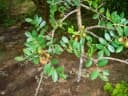
Commiphora leptophloeos
Commiphora leptophloeos
Safety & Hazards
None known
Cultivation Details
A plant of the 'Caatinga' dry forest region of northeast Brazil. The climate is hot and dry, there are usually 6 to 11 months without rain each year. The mean annual rainfall varies from 250 - 1,000mm, and the mean annual temperature is from 24 - 26°c. Prefers a sunny position[1]. Found in deep, well-drained, chalky soils in the wild[1]. Established plants are very drought tolerant[1].
Propagation
Seed - best sown as soon as it is ripe in a partially shaded position in a nursery seedbed. A germination rate of less than 50% can be expected, with the seed sprouting within a few weeks[1]. When the seedlings have 4- 6 leaves, pot them up into individual containers and they should be ready to plant out 5 - 7 months later[1]. Cite as: Tropical Plants Database, Ken Fern. tropical.theferns.info. 2026-02-20. <tropical.theferns.info/viewtropical.php?id=Commiphora+leptophloeos>
Pollinators
Bees
References
- [1]Brazilian Trees. Volume 2. 4th Edition. — Lorenzi. H. · Instituto Plantarum De Estudos Da Flora; Brazil. · 2002 · ISBN 85-86714-15-1 ↩︎Information on 350 species of Brazilian trees. Stunning photographs of each species, brief details on the plant, its uses and how to grow it from seed. A superb work, with the minor irritation that the translation from Portuguese is not of the best.
- [2]Espécies Nativas mais utilizadas pelas Comunidades Rurais — http://www.cnip.org.br/PFNMs/ ↩︎A set of information sheets on some of the plants of northeastern Brazil that are commonly used by the local people.