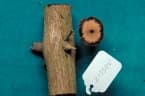
Combretum indicum
Combretum indicum
Safety & Hazards
The plant is commonly used in traditional medicine, especially to rid the body of parasites. Caution needs to be employed, however, since in large doses it can cause nausea, vomiting, hiccough and even unconsciousness[1]
Cultivation Details
Succeeds in the tropical, subtropical and warm temperate zones. Succeeds in full sun or partial shade[2]. Succeeds in a range of well-drained soils so long as they are not too fertile, since this will lead to foliage growth at the expense of flowering[2]. Tolerant of very poor growing conditions, it is not uncommon to see the plant rooted only into a small hole in cemented ground, but still thriving and climbing high[3]. The plant is widely grown in the tropics as an ornamental, and often escapes from cultivation to become naturalized. It has proved to be invasive in countries such as Australia, where it spreads by seed and also by suckers[4]. A very variable species[1]. Plants grown from seed will often adopt a shrub-like habit when young, adopting a climbing habit as they get older[2]. Under good conditions it will be necessary to prune the plant to keep it in bounds[3]..
Propagation
Seed - Softwood cuttings with a heel in a frame[2]. Cite as: Tropical Plants Database, Ken Fern. tropical.theferns.info. 2026-02-20. <tropical.theferns.info/viewtropical.php?id=Combretum+indicum>
Pollinators
Data unavailable
References
- [1]Plant Resources of Southeast Asia — http://proseanet.org/ ↩︎Lots of information on the uses of the plants of SE Asia.
- [2]The New RHS Dictionary of Gardening. 1992. — Huxley. A. · MacMillan Press · 1992 · ISBN 0-333-47494-5 ↩︎Excellent and very comprehensive, though it contains a number of silly mistakes. Readable yet also very detailed.
- [3]Flowers of India — http://www.flowersofindia.net/ ↩︎A wed site of native Indian plants, plus cultivated and naturalized species. It has good quality photos and terse details on more than 3,000 species and cultivars.
- [4]Pacific Island Ecosystems at Risk — http://www.hear.org/pier/scientificnames/index.html ↩︎A very good website detailing weed species that have been introduced into the Pacific Islands.
- [5]Flora of China — Missouri Botanical Garden Press; St. Louis. · 1994 · http://flora.huh.harvard.edu/china/ ↩︎An excellent, comprehensive resource in 25 volumes. In addition to the botanical information the flora also gives basic information on habitat and some uses. An on-line version is also available.
- [6]Mansfeld's Database of Agricultural and Horticultural Plants — http://mansfeld.ipk-gatersleben.de/pls/htmldb_pgrc/f?p=185:3:4292127278597336 ↩︎Terse details of a huge range of useful plants.
- [7]Medicinal Plants in Vietnam — Nguyen Van Dan & Doan Thi Nhu · World Health Organisation · 1989 · ISBN 92 9061 101 4 ↩︎An excellent book, giving information on over 200 plants, their medicinal compounds and applications.