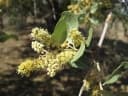
Combretum imberbe
Combretum imberbe
Safety & Hazards
None known
Cultivation Details
Plants are not tolerant of frosts[1]. Grows best in a sunny position and a well-drained soil[1]. Established trees are fairly drought resistant[1]. A very slow growing tree[2]. Under natural conditions, mean annual diameter increment rates of only 0.3 mm to 2 mm have been recorded, but under optimal conditions in cultivation young trees may reach 6 m tall in 15 years[2]. The trees can become very old. Radiocarbon dating showed that some specimens were over 1,000 years old. Dead trees can remain upright for as much as 80 years.[2]. Trees respond well to coppicing[2]. The number of shoots produced from cut stems is negatively correlated with the height at which the trees are cut, but shorter shoots are produced when the tree is cut close to the ground. A cutting height of 1 metre appears most advantageous[2].
Propagation
Seed - best sown when still fresh. Pre-soak in warm water for a few hours before pressing the seed into seedling trays filled with river sand. After they have been covered with a thin layer of sand, the seeds should be kept moist. They germinate in 1 - 2 weeks, but very low germination rates have been recorded (3 - 5%), as well as high mortality among seedlings[2]. The seedlings can be transplanted into nursery bags after development of the second leaf[2]. The seed of most, if not all, species can be stored inside the fruit for several years without losing viability[2]. Cite as: Tropical Plants Database, Ken Fern. tropical.theferns.info. 2026-02-20. <tropical.theferns.info/viewtropical.php?id=Combretum+imberbe>
Pollinators
Data unavailable
References
- [1]PlantZAfrica.com — http://www.plantzafrica.com ↩︎An excellent site giving detailed descriptions and uses of many S. African plants.
- [2]Protabase - Plant Resources of Tropical Africa. — http://www.prota.org ↩︎An excellent on-line database with detailed information on over 3,200 species of useful plants of Africa.
- [3]Flora Zambesiaca — http://apps.kew.org/efloras/fz/intro.html ↩︎An excellent online flora of plants from the Zambezi River basin. It lists a number of the plant uses as well as the habitats and botanical descriptions of the plants.
- [4]Gemsbok Bean and Kalahari Truffle — Leffers A. · Gamsberg MacMillan; Namibia. · 2003 · ISBN 99916-0-491-X ↩︎Details of the traditional uses of over 200 species of plants in northeastern Namibia. Written for the non-expert, there is usually at least one photograph with each plant entry.