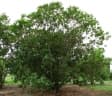
Colubrina oppositifolia
Colubrina oppositifolia
Safety & Hazards
None known
Cultivation Details
Not known
Propagation
Seed - untreated seed has a germination rate of 5 - 30%. Pre-soaking for 3 days in cool water, or scarifying the seed can increase this rate to 65%, whilst reducing germination time to 2 - 8 weeks. Seeds should be planted in a shallow container in a well-draining medium. The planting medium should be keep moist until germination and the containers should be kept in a covered shaded area for better control of moisture levels[1]. The fruit of Colubrina oppositifolia is a almost round capsule 1/2 inch in diameter. The capsule has 3 parts and there are generally several seeds in each capsule. The dark brown to black oval seeds can be up to 1/4 inch long. The fruits ripen from late spring through early fall. The capsule opens explosively when it is mature. Full-sized fruits that have not completely dried and are still greenish-brown often contain more viable seeds than completely mature capsules. These not-quite-mature fruits should be ripened in a dry location free from insects for a few weeks. The seeds can be extracted after this process[1]. Cite as: Tropical Plants Database, Ken Fern. tropical.theferns.info. 2026-02-20. <tropical.theferns.info/viewtropical.php?id=Colubrina+oppositifolia>
Pollinators
Data unavailable
References
- [1]Hawaiian Native Plant Propagation Database — http://pdcs.ctahr.hawaii.edu:591/hawnprop/ ↩︎Detailed information on the propagation of a wide range of Hawaiian plants.
- [2]Hawaii Biodiversity and Mapping Programme — http://hbmp.hawaii.edu/hbmp/index.html ↩︎A series of fact sheets on some of the more threatened species of plant and animal life on the islands of Hawaii. Over 1,300 soecies, about half of which are plants!
- [3]IUCN Red List of Threatened Species — http://www.iucnredlist.org/ ↩︎A list of plants under threat and facing possible extinction, usually with brief details of the threats and information on habitat.
- [4]Dictionary of Economic Plants. — Uphof. J. C. Th. · Weinheim · 1959 · ISBN - ↩︎An excellent and very comprehensive guide but it only gives very short descriptions of the uses without any details of how to utilize the plants. Not for the casual reader.