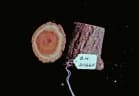
Colubrina asiatica
Colubrina asiatica
Safety & Hazards
The fruits contain saponins and are used as a fish poison[1].
Cultivation Details
Requires a sunny position, though able to tolerate some shade[2, 3]. Tolerant of a wide range of soils, including poor sands and coral-based soils[3]. Succeeds in saline soils and also tolerates strong, salt-laden winds[3]. Established plants are very drought tolerant[3]. The plant easily escapes from cultivation and also spreads freely by seed, which is carried by ocean currents. It aggressively outcompetes native vegetation. It is found most often at the interface of uplands and submerged lands or between beach dune and maritime hammock. It is also frequently found along elevated road shoulders in coastal areas, from where it can spread into adjacent natural areas. The seeds are constantly dispersed at a rapid rate by ocean currents, and seed-eating birds may also ingest them as crop stones, producing a wider dispersal range. The plant exhibits tremendous vegetative regeneration, including adventitious rooting from branches coming in contact with the soil and vigorous resprouting from cut or injured stems[2]. Seedlings reach sexual maturity in about one year, and even young plants produce many seeds, so open areas around the plant are rapidly colonised[2]. A fast-growing plant[2].
Propagation
Seed - sow in a sunny position[2]. The seeds can remain viable for several months when soaked in salt water, and also remain viable for several years when in the soil[2]. Cite as: Tropical Plants Database, Ken Fern. tropical.theferns.info. 2026-02-20. <tropical.theferns.info/viewtropical.php?id=Colubrina+asiatica>
Pollinators
Data unavailable
References
- [1]Philippine Medicinal Plants — http://www.stuartxchange.org/CompleteList.html ↩︎A lovely site, giving brief details on the medicinal uses of several hundred (over 400 at the last count) plants in the Philippines, plus a picture of each plant.
- [2]Global Invasive Species Database — http://www.issg.org/database/welcome/ ↩︎Very detailed information on almost 400 species (with more being added) of plants that have become weeds in areas outside their native range.
- [3]Native Plants Hawaii — http://nativeplants.hawaii.edu/plant/ ↩︎A website containing information on a range of native Hawaiian plants, with descriptions, habitat, traditional uses etc.
- [4]Australian Tropical Rainforest Plants — http://www.anbg.gov.au/cpbr/cd-keys/rfk/index.html ↩︎An online resource giving botanical information, and a little bit about plant usage, for over 2,700 species of plants found in the Australian rainforest.
- [5]Medicinal Plants of the Philippines — Bureau of Plant Industry, Philippines. · http://www.bpi.da.gov.ph/Publications/mp/mplants.html ↩︎An Internet site from the Philippines Department of Agriculture, giving information in a readable way on the medicinal uses of many plants in their area.
- [6]The Useful Plants of the Island of Guam — Safford W.E. · Smithsonian Institute; Washington. · 1905 · http://www.biodiversitylibrary.org/ ↩︎A very comprehensive, if rather dated, guide to the plants of Guam. It can be downloaded from the Internet.