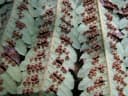
Cibotium glaucum
Cibotium glaucum
Safety & Hazards
Although we have found no reports of toxicity for this species, a number of ferns contain carcinogens so some caution is advisable[1]. Many ferns also contain thiaminase, an enzyme that robs the body of its vitamin B complex. In small quantities this enzyme will do no harm to people eating an adequate diet that is rich in vitamin B, though large quantities can cause severe health problems. The enzyme is destroyed by heat or thorough drying, so cooking the plant will remove the thiaminase[2].
Cultivation Details
A plant of moderate elevations in the Tropics. It grows in areas where the mean annual rainfall is in the range 1,250 - 2,500mm[3]. Plants can tolerate full sun if grown on a slope facing away from the direction of the sun, otherwise it grows better in dappled shade[3]. Prefers a slightly acidic, well drained soil with ample moisture[3]. A very slow-growing plant, generally increasing in height by only 2 - 3cm a year once past the seedling stage[3].
Propagation
Spores - these should be collected from mature fronds of healthy plants. The most mature fronds are generally those lower down on the plant. The spore containers (sori) on these fronds should appear full and plump. The frond branches (pinnae) should be removed from the main frond stem and dried in paper bags, envelopes, or folded newspaper packets. Place each frond piece in its own paper container with the spore side down. To ensure that the spores dry quickly and do not go mouldy, place the containers in a single layer in a warm, dry location for 2 or 3 days. The ripe spores will fall off of the fronds. The spores can be separated from the remaining debris using a very fine screen or sieve[4]. Sanitation is an important part of sowing fern spores to prevent both fungal infections and cross contamination by other fern spores. Any sowing medium needs to be fully sterilized before sowing the spores. The cleaned spores are spread on the surface of the sterilized mix and moistened with a fine spray of distilled water. Mixing the spores with water and spraying them onto the planting mix can provide more even distribution. Place a lid over the mix in order to prevent contamination and to maintain high humidity[4]. Clean, dry spores can be stored in paper envelopes or packets. Place the envelopes in an air tight container and place it in the refrigerator[4]. Side shoots that form on the main trunks can be used to form new plants[4]. This species develops side shoots more frequently than other species in the genus. Success generally depends on the size of the side shoot, but plants from side shoots tend to grow slower than plants grown from spores[4]. Cite as: Tropical Plants Database, Ken Fern. tropical.theferns.info. 2026-02-20. <tropical.theferns.info/viewtropical.php?id=Cibotium+glaucum>
Pollinators
Data unavailable
References
- [1]The New RHS Dictionary of Gardening. 1992. — Huxley. A. · MacMillan Press · 1992 · ISBN 0-333-47494-5 ↩︎Excellent and very comprehensive, though it contains a number of silly mistakes. Readable yet also very detailed.
- [2]Discovering Wild Plants - Alaska, W. Canada and the Northwest. — Schofield. J. J. · Alaska Northwest Books; Alaska · 2003 · ISBN 0882403699 ↩︎A nice guide to some useful plants in that area.
- [3]Native Plants Hawaii — http://nativeplants.hawaii.edu/plant/ ↩︎A website containing information on a range of native Hawaiian plants, with descriptions, habitat, traditional uses etc.
- [4]Hawaiian Native Plant Propagation Database — http://pdcs.ctahr.hawaii.edu:591/hawnprop/ ↩︎Detailed information on the propagation of a wide range of Hawaiian plants.
- [5]Useful Fiber Plants of the World — Dodge C.R. · USDA; Washington. · 1897 · http://www.biodiversitylibrary.org/ ↩︎A rather dated, but very comprehensive catalogue of fibre plants from around the world. The book can be downloaded from the Internet.
- [6]Hawaiian Ethnobotany Online Database — http://www2.bishopmuseum.org/ethnobotanydb/index.asp ↩︎Brief details on over 100 species of Hawaiian plants.