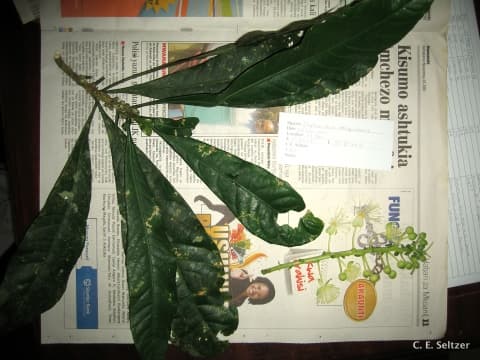
Sapindaceae FAMILY Vulnerable
Chytranthus obliquinervis
Chytranthus obliquinervis
Edibility
2/5
Medicinal
0/5
Safety & Hazards
None known
Cultivation Details
HabitTree
Growth—
It is unclear whether the tree is monoecious or dioecious. If dioecious, then both male and female forms of the tree will need to be grown if fruit and seed are required[1]..
Propagation
Seed - Cite as: Tropical Plants Database, Ken Fern. tropical.theferns.info. 2026-02-20. <tropical.theferns.info/viewtropical.php?id=Chytranthus+obliquinervis>
Pollinators
Data unavailable
References
- [1]Flora of Tropical East Africa — Beentje H.J. · Royal Botanic Gardens; Kew. · 2002 · http://plants.jstor.org/search?st=396814 ↩︎Available on-line, a modern flora of East Africa.
- [2]Edible Wild Plants of Tanzania — Ruffo, C.K.: Birnie, A. & Tengnas, B. · Regional Land Management Unit; Nairobi. · 2002 · ISBN 9966-896-60-0 ↩︎A very well presented, simple guide to growing and utilizing wild food plants in Tanzania, with line drawings of each plant, a description, habitat and range, non-food as well as food uses, plus basic information on growing the plants.
- [3]IUCN Red List of Threatened Species — http://www.iucnredlist.org/ ↩︎A list of plants under threat and facing possible extinction, usually with brief details of the threats and information on habitat.