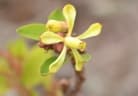
Chukrasia tabularis
Chukrasia tabularis
Safety & Hazards
None known
Cultivation Details
Chickrassy is a plant of the lowland tropics, usually found in an altitude range of 300 - 800 metres[1]. It succeeds in areas where the mean annual temperature is in the range 20 - 25°c with an absolute minimum of 5 - 10°c[2]. It grows best in areas where the mean annual rainfall is 1,400 - 4,000mm - it can tolerate as little as 850mm rainfall, but growth is then rather slow, in fact it does not achieve its full potential below 2,000mm rainfall[2]. Prefers a sunny position, tolerating light shade[3]. Avoids heavy and wet soils[1]. It is usually found on well-drained soil in the plains and on hills[1]. Plants are often found on limestone in the wild[1]. Prefers a pH in the range 5.5 - 6.5, tolerating 5 - 7[3]. Plants are generally wind-tolerant[4]. The growth of seedlings is moderately fast over the first few years with plants reaching a height of 1.2 - 2.1 metres after two years; 2.8 - 3.4 metres after 3 years; 5.5 metres tall after 6 years[1]. The tree coppices particularly well[1].
Propagation
Seed requires no pre-treatment and is sown with overhead shade in light porous soil. Germination is fair: in Malaysia 35% of the seeds sown germinated in 1 - 2.5 weeks, in India 80-90% in 1 - 4 weeks[1]. Where seed is plentiful, the best method is broadcast sowing in strips 0.6 m wide and 1.8 m apart. Best results have been obtained by raising seedlings in well-drained boxes and pots before transplanting[1]. Seedlings are pricked out and transplanted to the nursery beds when about 1 month old and 6 - 8 cm high[1]. Fresh seed retains its viability for a relatively short period, about 3 months[1]. Air-layering[1]. Cite as: Tropical Plants Database, Ken Fern. tropical.theferns.info. 2026-02-20. <tropical.theferns.info/viewtropical.php?id=Chukrasia+tabularis>
Pollinators
Data unavailable
References
- [1]World Agroforesty Centre — http://www.worldagroforestry.org/ ↩︎An excellent online database of a huge range of trees giving very good information on each plant - its uses, ecology, identity, propagation, pests etc.
- [2]Seed Leaflets — Various · Forest & Landscape. Denmark · http://en.sl.life.ku.dk/Publikationer/Udgivelser/PopulaerPublikationer.aspx?katid={D28373CC-6EF3-4EF8-B097-6D83FABF209E}&serieid={9F1C3DB1-6E7B-4CF1-AF53-F480B0CB40EF}&sort=title ↩︎A series of leaflets, jointly produced by the University of Copenhagen and the Royal Botanic Gardens at Kew, focussing on seed information for a number species, but also giving a lot of other information about each plant.
- [3]Ecocrop — http://ecocrop.fao.org/ecocrop/srv/en/home ↩︎Basic information on a wide range of useful plants, plus details of environmental needs where available.
- [4]Digital Compendium of Forestry Species of Cambodia — www.digitalspecies.blogspot.com; Phnom Penh · 2008 · http://www.digitalspecies.blogspot.com ↩︎A very detailed booklet, produced in PDF format on the internet, giving information on around 100 species of trees.
- [5]Flora Malesiana Series 1 — Various · Nationaal Herbarium Nederiand, Universiteit Leiden branch · http://www.archive.org ↩︎A massive treatment of the plants of the Malaysian Archipelago. Much of it has been made available to download from the Internet
- [6]Protabase - Plant Resources of Tropical Africa. — http://www.prota.org ↩︎An excellent on-line database with detailed information on over 3,200 species of useful plants of Africa.
- [7]IUCN Red List of Threatened Species — http://www.iucnredlist.org/ ↩︎A list of plants under threat and facing possible extinction, usually with brief details of the threats and information on habitat.