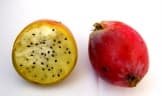
Cereus hildmannianus
Cereus hildmannianus
Safety & Hazards
None known
Cultivation Details
Cereus hildmannianus is a plant of the warm temperate to tropical regions. Plants are quite hardy when conditions are fairly dry, able to tolerate occasional short-lived temperatures as low as -10°c[1]. Requires a sunny position and a well-drained soil[1, 2]. Prefers a pH lower than 6[3]. Established plants are very drought tolerant[2]. There are reports that the plant has escaped from cultivation and become invasive in Hawaii[4]. Newly planted trees are slow to establish and grow away[2].
Propagation
Seed - best sown as soon as it is ripe. Sow the seed in a semi-shaded position, spreading the seed on the surface and watering it into the soil. Germination rates are usually low with the seed sprouting within 30 - 50 days[2]. Cuttings. One of the easiest cactus to propagate by cuttings[1]. Cite as: Tropical Plants Database, Ken Fern. tropical.theferns.info. 2026-02-20. <tropical.theferns.info/viewtropical.php?id=Cereus+hildmannianus>
Pollinators
Bees
References
- [1]Desert Tropicals — http://www.desert-tropicals.com/ ↩︎The main focus of the site is succulent plants, but it also contains information on a wide range of other species. Usually at least one good photograph, plus basic information about the plant and its cultivation.
- [2]Brazilian Trees. Volume 3. — Lorenzi. H. · Instituto Plantarum De Estudos Da Flora; Brazil. · 2009 · ISBN 85-86714-34-4 ↩︎Information on 350 species of Brazilian trees. Stunning photographs of each species, brief details on the plant, its uses and how to grow it from seed. A superb work, with the minor irritation that the translation from Portuguese is not of the best.
- [3]The New RHS Dictionary of Gardening. 1992. — Huxley. A. · MacMillan Press · 1992 · ISBN 0-333-47494-5 ↩︎Excellent and very comprehensive, though it contains a number of silly mistakes. Readable yet also very detailed.
- [4]Pacific Island Ecosystems at Risk — http://www.hear.org/pier/scientificnames/index.html ↩︎A very good website detailing weed species that have been introduced into the Pacific Islands.
- [5]IUCN Red List of Threatened Species — http://www.iucnredlist.org/ ↩︎A list of plants under threat and facing possible extinction, usually with brief details of the threats and information on habitat.
- [6]Cornucopia II — Facciola. S. · Kampong Publications, California. · 1998 · ISBN 0-9628087-2-5 ↩︎The second edition of an excellent guide to the edible uses of plants, though it does not give any details of cultivation etc.
- [7]Medicinal Plants of Brazil — Mors W.B.; Rizzini C.T.; Pereira N.A. · Reference Publications; Michigan. · 2000 · ISBN 0-917256-42-5 ↩︎An extremely concise book, listing approximately 1,500 species and varieties of plants with their botanical name, common name in Brazil, regions in Brazil where the plant is found, a brief list of uses and any medically active compounds in the plant.