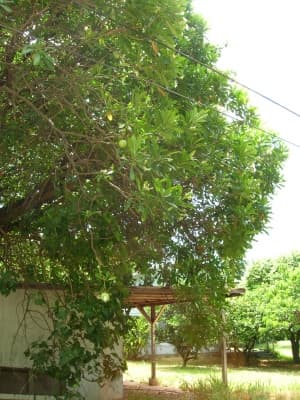
Apocynaceae FAMILY
Cerbera manghas
Cerbera manghas
Edibility
0/5
Medicinal
2/5
Cultivation Details
HabitEvergreen Tree
Growth—
Cerbera manghas is a plant of the moist lowland tropics. Plants should preferably be grown in full light in a fertile, moist but well-drained loam with additional leaf mould[3]. Often growing along the beach in the wild, this species should be resistant to maritime winds[PFAF]. A white latex exudes from all plant parts[3] The flowers are fragrant[4]. They have the scent of frangipani[1]. Small amounts of the timber are exported from Papua New Guinea and the Solomon Islands to Japan[3].
Propagation
Seed - germination is erratic[1]. Cuttings Cite as: Tropical Plants Database, Ken Fern. tropical.theferns.info. 2026-02-20. <tropical.theferns.info/viewtropical.php?id=Cerbera+manghas>
Pollinators
Data unavailable
References
- [1]Australian Rainforest Plants Volumes 1 - 6 — Nicholson N. & H. · Terania Rainforest Publishing; New South Wales. · 2007 · ISBN 9-78095894-3628 ↩︎Beautiful set of booklets with a terse description of over 600 species and their habitat, often including some of their uses and notes on their cultivation, plus at least one, excellent photograph.
- [2]Flora of China — Missouri Botanical Garden Press; St. Louis. · 1994 · http://flora.huh.harvard.edu/china/ ↩︎An excellent, comprehensive resource in 25 volumes. In addition to the botanical information the flora also gives basic information on habitat and some uses. An on-line version is also available.
- [3]Protabase - Plant Resources of Tropical Africa. — http://www.prota.org ↩︎An excellent on-line database with detailed information on over 3,200 species of useful plants of Africa.
- [4]Medicinal Plants in Vietnam — Nguyen Van Dan & Doan Thi Nhu · World Health Organisation · 1989 · ISBN 92 9061 101 4 ↩︎An excellent book, giving information on over 200 plants, their medicinal compounds and applications.
- [5]Plant Resources of Southeast Asia — http://proseanet.org/ ↩︎Lots of information on the uses of the plants of SE Asia.
- [6]Economic Products of India. Volume 1. — Watt. G. · Government of India: Calcutta. · 1883 ↩︎Although over 100 years old, it still contains a wealth of information on useful plants. Many of the botanical names have been changed since then, so you have to check for up to date names. The book can be downloaded from the Internet.
- [7]Oil Yielding Plants — Botanical Survey of India. · 2004 · http://mnes.nic.in/list/oil-plants.pdf ↩︎A PDF downloaded from the Internet. Very terse details about the applications of oil obtained from over 300 species of plants.
- [PFAF]Plants for a Future — pfaf.org ↩︎