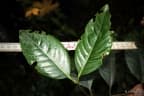
Rhizophoraceae FAMILY
Cassipourea gummiflua
Cassipourea gummiflua
Edibility
0/5
Medicinal
1/5
Safety & Hazards
The much-cited report that ingestion of the wood shavings by poultry results in sex change of female chicks is erroneous. It later appeared that the shavings concerned were from a different species, Funtumia africana; the androgenic effect is due to infection of these shavings with the steroid-producing saprophytic fungus Fusarium solani[1].
Cultivation Details
HabitEvergreen Tree
Growth—
Not known
Propagation
Seed - Cite as: Tropical Plants Database, Ken Fern. tropical.theferns.info. 2026-02-20. <tropical.theferns.info/viewtropical.php?id=Cassipourea+gummiflua>
Pollinators
Data unavailable
References
- [1]Protabase - Plant Resources of Tropical Africa. — http://www.prota.org ↩︎An excellent on-line database with detailed information on over 3,200 species of useful plants of Africa.
- [2]Flora Zambesiaca — http://apps.kew.org/efloras/fz/intro.html ↩︎An excellent online flora of plants from the Zambezi River basin. It lists a number of the plant uses as well as the habitats and botanical descriptions of the plants.
- [3]The Useful Plants of West Tropical Africa. — Burkil. H. M. · Royal Botanic Gardens; Kew. · 1985 - 2004 ↩︎Brief descriptions and details of the uses of over 4,000 plants. A superb, if terse, resource, it is also available electronically on the Web - see http://www.aluka.org/
- [4]Field Guide to the Moist Forest Trees of Tanzania. — Lovett J.C.; Ruffo C.K.; Gereau R.E.; Taplin J.R.D · Frontier · http://www.york.ac.uk/res/celp/webpages/projects/ecology/tree%20guide/introduction.htm · ISBN 1-873070-33-0 ↩︎A lovely little book giving a basic identification guide to more than 650 species of trees growing in Tanzania. It is also available to view on the internet.
- [5]Flora of Zimbabwe — http://www.zimbabweflora.co.zw/ ↩︎Over 2,000 species as of 2009 (and growing). Each record usually has at least one photo with a botanical description of the plant, range, habitat etc. A very useful site.
- [PFAF]Plants for a Future — pfaf.org ↩︎