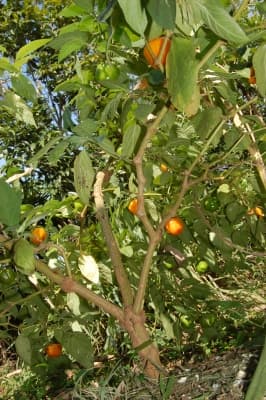
Capsicum pubescens
Capsicum pubescens
Safety & Hazards
Although providing many well-known foods for people, including the potato, tomato, pepper and aubergine, most plants in the family Solanaceae also contain poisonous alkaloids. Apart from the specific entries mentioned below containing information on the edible uses for this species, it would be unwise to ingest any other part of this plant[PFAF]. The sap of the plant can cause the skin to blister[1].
Cultivation Details
A plant of higher elevations in the tropics, it is cultivated from 1,500 - 2,900 metres in the Andes[2]. It does not usually succeed at low elevations in the tropics because of low fruit-set, but can be grown at lower elevations in the subtropics and in warm temperate zones[3, 2]. It grows best in areas where annual daytime temperatures are within the range 15 - 24°c, but can tolerate 7 - 32°c[2]. It prefers a mean annual rainfall in the range 600 - 1,250mm, but tolerates 500 - 1,500mm[2]. Requires a very warm sunny position and a fertile well-drained soil. Prefers a pH in the range 6 - 6.5, tolerating 5.5 - 7.3[2]. The plant can be cultivated as an annual[2]. Plants are able to continue fruiting for 15 years in cool but essentially frost-free, moist climates[4].
Propagation
Seed - sow late winter to early spring in a warm greenhouse[5]. The seed usually germinates in 3 - 4 weeks at 20°c. Prick out the seedlings into individual pots of reasonably rich soil and grow them on fast. If trying them outdoors, then plant them out after the last expected frosts and give them the protection of a cloche or frame at least until they are established and growing away well. Cite as: Temperate Plants Database, Ken Fern. temperate.theferns.info. 2026-02-20. <temperate.theferns.info/plant/Capsicum+pubescens>
Pollinators
Insects
References
- [1]The New RHS Dictionary of Gardening. 1992. — Huxley. A. · MacMillan Press · 1992 · ISBN 0-333-47494-5 ↩︎Excellent and very comprehensive, though it contains a number of silly mistakes. Readable yet also very detailed.
- [2]Ecocrop — http://ecocrop.fao.org/ecocrop/srv/en/home ↩︎Basic information on a wide range of useful plants, plus details of environmental needs where available.
- [3]Plant Resources of Southeast Asia — http://proseanet.org/ ↩︎Lots of information on the uses of the plants of SE Asia.
- [4]Encyclopaedia of Herbs and their Uses. — Bown. D. · Dorling Kindersley, London. · 1995 · ISBN 0-7513-020-31 ↩︎A very well presented and informative book on herbs from around the globe. Plenty in it for both the casual reader and the serious student. Just one main quibble is the silly way of having two separate entries for each plant.
- [5]Growing from Seed. Volume 3. — Bird. R. (Editor) · Thompson and Morgan. · 1989 · ISBN - ↩︎Very readable magazine with lots of information on propagation.
- [6]Cornucopia - A Source Book of Edible Plants. — Facciola. S. · Kampong Publications · 1990 · ISBN 0-9628087-0-9 ↩︎Excellent. Contains a very wide range of conventional and unconventional food plants (including tropical) and where they can be obtained (mainly N. American nurseries but also research institutes and a lot of other nurseries from around the world.
- [7]Encyclopaedia of Medicinal Plants. — Chiej. R. · MacDonald · 1984 · ISBN 0-356-10541-5 ↩︎Covers plants growing in Europe. Also gives other interesting information on the plants. Good photographs.
- [PFAF]Plants for a Future — pfaf.org ↩︎