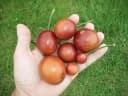
Capparaceae FAMILY
Capparis tomentosa
Capparis tomentosa
Edibility
1/5
Medicinal
2/5
Cultivation Details
HabitDeciduous Shrub
Growth—
A plant of the drier tropics, where it is found at elevations up to 2,300 metres. It grows best in areas where annual daytime temperatures are within the range 24 - 34°c, but can tolerate 16 - 40°c[2]. It prefers a mean annual rainfall in the range 500 - 1,000mm, but tolerates 300 - 1,250mm[2]. Requires a sunny position[2]. Prefers a well-drained, medium to light textured soil[2]. Prefers a pH in the range 6.5 - 8, tolerating 6 - 8.5[2]. Established plants are very drought tolerant[2].
Propagation
Seed - Cite as: Tropical Plants Database, Ken Fern. tropical.theferns.info. 2026-02-20. <tropical.theferns.info/viewtropical.php?id=Capparis+tomentosa>
Pollinators
Data unavailable
References
- [1]The Useful Plants of West Tropical Africa. — Burkil. H. M. · Royal Botanic Gardens; Kew. · 1985 - 2004 ↩︎Brief descriptions and details of the uses of over 4,000 plants. A superb, if terse, resource, it is also available electronically on the Web - see http://www.aluka.org/
- [2]Ecocrop — http://ecocrop.fao.org/ecocrop/srv/en/home ↩︎Basic information on a wide range of useful plants, plus details of environmental needs where available.
- [3]Flora Zambesiaca — http://apps.kew.org/efloras/fz/intro.html ↩︎An excellent online flora of plants from the Zambezi River basin. It lists a number of the plant uses as well as the habitats and botanical descriptions of the plants.
- [4]World Agroforesty Centre — http://www.worldagroforestry.org/ ↩︎An excellent online database of a huge range of trees giving very good information on each plant - its uses, ecology, identity, propagation, pests etc.