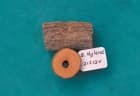
Caesalpinia major
Caesalpinia major
Safety & Hazards
None known
Cultivation Details
Not known
Propagation
Like many species within the family Fabaceae, once they have ripened and dried the seeds of this species may benefit from scarification before sowing in order to speed up and improve germination. This can usually be done by pouring a small amount of nearly boiling water on the seeds (being careful not to cook them!) and then soaking them for 12 - 24 hours in warm water. By this time they should have imbibed moisture and swollen - if they have not, then carefully make a nick in the seedcoat (being careful not to damage the embryo) and soak for a further 12 hours before sowing[PFAF]. Cite as: Tropical Plants Database, Ken Fern. tropical.theferns.info. 2026-02-19. <tropical.theferns.info/viewtropical.php?id=Caesalpinia+major>
Pollinators
Insects
References
- [1]Plant Resources of Southeast Asia — http://proseanet.org/ ↩︎Lots of information on the uses of the plants of SE Asia.
- [2]Australian Tropical Rainforest Plants — http://www.anbg.gov.au/cpbr/cd-keys/rfk/index.html ↩︎An online resource giving botanical information, and a little bit about plant usage, for over 2,700 species of plants found in the Australian rainforest.
- [3]Plants of Guam — Moore P.H. & McMakin P. · University of Guam. · 1979 · http://university.uog.edu/cals/people/POG/scipn.htm ↩︎Brief details, usually with a photo, of plants native to the island of Guam, often together with some information on their uses. An online version is available.
- [PFAF]Plants for a Future — pfaf.org ↩︎