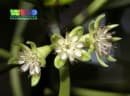
Bruguiera cylindrica
Bruguiera cylindrica
Safety & Hazards
None known
Cultivation Details
Tolerant of some shade[1]. Succeeds on sandy and on clay soils[2]. One of the most tolerant species of anaerobic soil conditions, it grows gregariously on stiff clay soils in the mangrove swamp. However, the very poorly aerated soil habitually occupied by this species makes it highly dependent upon its pneumatophores for an adequate supply of oxygen, and also particularly susceptible to prolonged submersion[3]. Since the tree is such a prolific seed-bearer, a healthy forest normally regenerates, even after clear-felling. Wildlings may be collected and used for planting, but regeneration has, so far, been left to nature in most cases[3]. The plant is viviparous - the seeds germinate and develop their root while still attached to the tree. After the seedlings are released they fall vertically into the mud and immediately become established[3]. The tree is able to establish itself in newly formed soils along the coast that are unsuitable for other mangroves. It can form pure stands above high tide level that can be extremely dense and may contain 55,000 - 70,000 stems per hectare[3, 4]. Heavy early thinnings are necessary to increase the rate of growth[4]. This species has the dubious honour of being the slowest growing of any commercial tree species in Malaya. From seed it takes around 11 - 12 years to attain a height of 6 metres; around 16 - 17 years to attain 9 metres with a bole 5cm in diameter; and around 60 years to attain a diameter of 30cm. Its rotation should be longer than the 30 years now accepted as an average for mangrove forest in Malays[4]. Harvesting is done manually with an axe or matchet. This minimizes disturbance to the mangrove. Young trees from short-term rotations are preferred[3]. Average annual wood production ranges from 2- 16 cubic metres per hectare[3].
Propagation
Seed - Cite as: Tropical Plants Database, Ken Fern. tropical.theferns.info. 2026-02-19. <tropical.theferns.info/viewtropical.php?id=Bruguiera+cylindrica>
Pollinators
Butterflies, Insects
References
- [1]IUCN Red List of Threatened Species — http://www.iucnredlist.org/ ↩︎A list of plants under threat and facing possible extinction, usually with brief details of the threats and information on habitat.
- [2]Plants of Southeast Asia — http://www.asianplant.net/ ↩︎Excellent site with brief information on the plant, its range, habitat and uses, plus phots of specimens, close-ops of flowers and leaves etc,
- [3]Plant Resources of Southeast Asia — http://proseanet.org/ ↩︎Lots of information on the uses of the plants of SE Asia.
- [4]Flora Malesiana Series 1 — Various · Nationaal Herbarium Nederiand, Universiteit Leiden branch · http://www.archive.org ↩︎A massive treatment of the plants of the Malaysian Archipelago. Much of it has been made available to download from the Internet