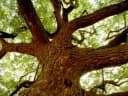
Azadirachta indica
Azadirachta indica
Safety & Hazards
Neem extracts may have toxic effects on fish and other aquatic wildlife and on some beneficial insects. Therefore, care should be taken that any unused extracts are disposed of by exposing them to heat or sunlight to break down the active compounds[1].
Cultivation Details
Neem is a very tough tree and is said to grow almost anywhere in the lowland tropics and subtropics. It is cultivated at elevations up to 1,500 metres, but grows best when below 700 - 800 metres[2, 1, 3, 4]. It grows best in areas where annual daytime temperatures are within the range 26 - 40°c, but can tolerate 14 - 46°c[4]. Mature plants tolerate some frost, but seedlings are more sensitive[1]. It prefers a mean annual rainfall in the range 450 - 1,200mm, but tolerates 200 - 2,000mm[4]. Prefers a well-drained soil in a sunny position[2]. Tolerates poor soils and is drought tolerant once established[2]. The plant quickly dies in waterlogged soils, and does not succeed in deep dry sands where the dry-season water table lies below 18 metres[1, 4]. Tolerant of moderate soil salinity[4]. Plants can tolerate fairly heavy shade during their first few years, though then require large amounts of light[1]. Prefers a pH in the range 5.5 - 7, tolerating 5 - 7.5[4]. The plant needs some control, for it may aggressively invade neighbouring areas and become a weed[4]. A fast-growing tree, it can reach a height of 4 - 7 metres after 3 years, and 5 - 11 metres after 8 years[4]. Trees may start flowering and fruiting at the age of 4 - 5 years, but economic quantities of seed are produced only after 10 - 12 years[1]. Trees coppice freely, and early growth from coppice is faster than growth from seedlings[1]. The plant also withstands pollarding well[1].
Propagation
Seed - best sown as soon as it is ripe, it does not require pre-treatment, though depulping and cleaning of seeds considerably improves the germination rate[2, 3]. The seed can be sown in a nursery seedbed, direct in situ or in containers, covering the seed with about 1cm of compost[5]. Mature seeds germinate within a week, with a germination percentage of 75 - 90%[1]. Seedlings can be potted up when they are about 5cm tall[3]. Air-layering. Root cuttings. Cite as: Tropical Plants Database, Ken Fern. tropical.theferns.info. 2026-02-19. <tropical.theferns.info/viewtropical.php?id=Azadirachta+indica>
Pollinators
Bees, Insects
References
- [1]World Agroforesty Centre — http://www.worldagroforestry.org/ ↩︎An excellent online database of a huge range of trees giving very good information on each plant - its uses, ecology, identity, propagation, pests etc.
- [2]Encyclopaedia of Herbs and their Uses. — Bown. D. · Dorling Kindersley, London. · 1995 · ISBN 0-7513-020-31 ↩︎A very well presented and informative book on herbs from around the globe. Plenty in it for both the casual reader and the serious student. Just one main quibble is the silly way of having two separate entries for each plant.
- [3]Seed Leaflets — Various · Forest & Landscape. Denmark · http://en.sl.life.ku.dk/Publikationer/Udgivelser/PopulaerPublikationer.aspx?katid={D28373CC-6EF3-4EF8-B097-6D83FABF209E}&serieid={9F1C3DB1-6E7B-4CF1-AF53-F480B0CB40EF}&sort=title ↩︎A series of leaflets, jointly produced by the University of Copenhagen and the Royal Botanic Gardens at Kew, focussing on seed information for a number species, but also giving a lot of other information about each plant.
- [4]Ecocrop — http://ecocrop.fao.org/ecocrop/srv/en/home ↩︎Basic information on a wide range of useful plants, plus details of environmental needs where available.
- [5]An Illustrated Flora of the Northern United States and Canada — Britton. N. L. Brown. A. · Dover Publications. New York. · 1970 · ISBN 0-486-22642-5 ↩︎Reprint of a 1913 Flora, but still a very useful book.
- [6]Tropical and Subtropical Trees - A Worldwide Encyclopaedic Guide. — Barwick. M. · Thames & Hudson, London · 2004 · ISBN 0-500-51181-0 ↩︎A superb book, very concise and well written, giving a wealth of information on 400 or more species including descriptions, habitat, cultivation details and plant uses. A wealth of colour photographs bring each plant vividly to life.
- [7]Cornucopia II — Facciola. S. · Kampong Publications, California. · 1998 · ISBN 0-9628087-2-5 ↩︎The second edition of an excellent guide to the edible uses of plants, though it does not give any details of cultivation etc.
- [8]The Encyclopedia of Medicinal Plants — Chevallier. A. · Dorling Kindersley. London · 1996 · ISBN 9-780751-303148 ↩︎An excellent guide to over 500 of the more well known medicinal herbs from around the world.
- [9]Flora of Pakistan — http://www.efloras.org ↩︎As of 2006, there is not much information on habitats available, but it is being developed and promises to be an excellent resource.
- [10]Inhibition of Meliodogyne incognita Egg Hatching by Herbal Extracts — Elbadri G.A.A.; Dong Woon Lee; Jung Chan Park; Ho Yul Choo; · 2008 ↩︎