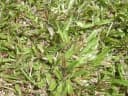
Axonopus compressus
Axonopus compressus
Safety & Hazards
None known
Cultivation Details
A plant of the moist tropics and humid subtropics, where it is found at elevations up to 2,300 metres. It grows best in areas where annual daytime temperatures are within the range 23 - 30°c, but can tolerate 16 - 35°c[1]. The plant has some tolerance to frost - although the tops may be damaged it is able to regrow from the base[2, 1]. It prefers a mean annual rainfall in the range 1,000 - 4,000mm, but tolerates 775 - 5,000mm[1]. Grows best in a sunny position, but is able to tolerate considerable shade[1]. Prefers a well-drained, medium to light soil of moderate fertility, but can tolerate heavier soils and low fertility[1]. Prefers a pH in the range 5.5 - 6, tolerating 5 - 7[1]. The plant can escape from cultivation and become a weed[3, 1]. It is considered to be invasive in many areas, especially in the moister lowland tropics and near the equator[3, 2]. Plants can flower and produce seed all year round[3] The plant is reported to have an ability to fix atmospheric nitrogen through associated micro-organisms[4].
Propagation
Seed - Division of the rhizomes Cite as: Tropical Plants Database, Ken Fern. tropical.theferns.info. 2026-02-19. <tropical.theferns.info/viewtropical.php?id=Axonopus+compressus>
Pollinators
Wind
References
- [1]Ecocrop — http://ecocrop.fao.org/ecocrop/srv/en/home ↩︎Basic information on a wide range of useful plants, plus details of environmental needs where available.
- [2]Tropical Forages — http://www.tropicalforages.info/key/Forages/Media/Html/index.htm ↩︎Mainly focussed on forage plants, the site gives a lot of information on the plant, with a good botanical description, details of cultivation, plant uses and a good selection of photographs.
- [3]Pacific Island Ecosystems at Risk — http://www.hear.org/pier/scientificnames/index.html ↩︎A very good website detailing weed species that have been introduced into the Pacific Islands.
- [4]Plant Resources of Southeast Asia — http://proseanet.org/ ↩︎Lots of information on the uses of the plants of SE Asia.
- [5]Medicinal Plants of the Guianas — DeFilipps, R. A.; Maina, S. L.; & Crepin, J. · Smithsonian Museum · http://botany.si.edu/bdg/medicinal/index.html ↩︎A down-loadable PDF document of a book in pre-publication awaiting illustration. An excellent, if rather terse, guide to the traditional medicinal uses of the plants of the region