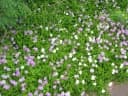
Asystasia gangetica
Asystasia gangetica
Safety & Hazards
None known
Cultivation Details
Grows best in the humid areas of the tropics[1]. In parts of Africa, where it has become naturalized, it grows in areas where the mean annual rainfall is in the range 1,200 - 2,100mm[2]. Plants may not survive without irrigation in areas with a dry season of 4 months or more[3]. An easily grown plant, preferring a relatively dry soil and a position in full sun or partial shade[4]. Thrives on sedentary soils, coastal alluvium, sandy loams and clays[3]. Plants can succeed in peat soils with 85% organic matter and a pH as low as 3.5 - 4.5[3]. A shade-loving plant, optimum photosynthesis occurs between 33 - 50% full sunlight and the plant can grow, albeit slowly, with only 10% sunlight[3]. Established plants are drought tolerant[4]. The plant has escaped from cultivation and become naturalised in many parts of the tropics. It has become naturalised in disturbed forest communities in some areas, such as Hawaii[4]. With no weeding, its proportion in the undergrowth of a young oil palm plantation increased in a period of 2 years from 25% to 84%[3]. A rapidly growing perennial, shrubby herb, growing up to 1 metre tall but able to grow over shrubs that are up to 3 metres tall - smothering all the vegetation in the herbaceous layer[5].
Propagation
Seed - Cuttings with 1 - 3 nodes[6]. Single-node cuttings, buried in the soil, can produce flowers and fruit within 6 weeks[6]. Division of rooted stems Cite as: Tropical Plants Database, Ken Fern. tropical.theferns.info. 2026-02-19. <tropical.theferns.info/viewtropical.php?id=Asystasia+gangetica>
Pollinators
Bees
References
- [1]The New RHS Dictionary of Gardening. 1992. — Huxley. A. · MacMillan Press · 1992 · ISBN 0-333-47494-5 ↩︎Excellent and very comprehensive, though it contains a number of silly mistakes. Readable yet also very detailed.
- [2]Edible Wild Plants of Tanzania — Ruffo, C.K.: Birnie, A. & Tengnas, B. · Regional Land Management Unit; Nairobi. · 2002 · ISBN 9966-896-60-0 ↩︎A very well presented, simple guide to growing and utilizing wild food plants in Tanzania, with line drawings of each plant, a description, habitat and range, non-food as well as food uses, plus basic information on growing the plants.
- [3]Plant Resources of Southeast Asia — http://proseanet.org/ ↩︎Lots of information on the uses of the plants of SE Asia.
- [4]Tropical Ornamentals; A Guide — Whistler. W. Arthur. · Timber Press Inc. Oregon. · 2000 · ISBN 0-88192-448-2 ↩︎An excellent little guide to some of the more commonly cultivated ornamental plants of the Tropics, often giving some information on the plants other uses.
- [5]Pacific Island Ecosystems at Risk — http://www.hear.org/pier/scientificnames/index.html ↩︎A very good website detailing weed species that have been introduced into the Pacific Islands.
- [6]Traditional Vegetables in Benin — Achigan-Dako E. Et al · Darwin Initiative; International Foundation for Science · 2009 ↩︎Issued as a PDF on the Internet, it contains basic information on over 250 species of plants used for food in Benin.
- [7]The Useful Plants of West Tropical Africa. — Burkil. H. M. · Royal Botanic Gardens; Kew. · 1985 - 2004 ↩︎Brief descriptions and details of the uses of over 4,000 plants. A superb, if terse, resource, it is also available electronically on the Web - see http://www.aluka.org/
- [8]Protabase - Plant Resources of Tropical Africa. — http://www.prota.org ↩︎An excellent on-line database with detailed information on over 3,200 species of useful plants of Africa.
- [9]Philippine Medicinal Plants — http://www.stuartxchange.org/CompleteList.html ↩︎A lovely site, giving brief details on the medicinal uses of several hundred (over 400 at the last count) plants in the Philippines, plus a picture of each plant.