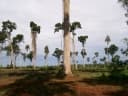
Aspidosperma polyneuron
Aspidosperma polyneuron
Safety & Hazards
The freshly cut wood and sap of Aspidosperma species causes irritation of the eyes, nose, and throat, with general malaise[1]. The sawdust, on contact with abraded skin, produces local burning and a vesicular eruption with general symptoms of muscular weakness and cramps, sweating, dryness of the mouth, and faintness[1]. Once the wood is thoroughly dry it loses its toxicity unless polishes or dyes in organic solvents are used on it[1]
Cultivation Details
Prefers a position with some shade[2]. Prefers a deep, fertile soil[2]. A slow-growing tree[2]. Silvicultural trials have been carried out and in different sites tree heights at 12 - 13 years have ranged from 4.7 to 7.8 metres[3].
Propagation
Seed - best sown as soon as it is ripe in a partially shaded position in a nursery seedbed or in individual containers. A germination rate in excess of 70% can be expected, with the seed sprouting within 10 - 20 days. Young plants grow away slowly[2]. The seed can remain viable for at least 6 months in storage[2]. Cite as: Tropical Plants Database, Ken Fern. tropical.theferns.info. 2026-02-19. <tropical.theferns.info/viewtropical.php?id=Aspidosperma+polyneuron>
Pollinators
Insects
References
- [1]BoDD (Botanical Dermatology Database) — http://bodd.cf.ac.uk/ ↩︎Brief notes on a very wide range of plants that have reports of causing harm to the skin.
- [2]Brazilian Trees. Volume 1. 4th Edition. — Lorenzi. H. · Instituto Plantarum De Estudos Da Flora; Brazil. · 2002 · ISBN 85-86714-17-8 ↩︎Information on 350 species of Brazilian trees. Stunning photographs of each species, brief details on the plant, its uses and how to grow it from seed. A superb work, with the minor irritation that the translation from Portuguese is not of the best.
- [3]Global Tree Campaign - 40 Species in Trade — http://www.unep-wcmc.org/trees/trade/40_species_in_trade.htm ↩︎Information on the habitats, uses and some cultivation notes for 40 species of timber trees.
- [4]Annals of the Missouri Botanical Garden Vol. 38 — Missouri Botanical Garden · 1951 ↩︎An excellent botanical publication, available for download from the Internet. This volume contains part of the Flora of Panama and a revision of the genus Aspidosperma, amongst other things.
- [5]IUCN Red List of Threatened Species — http://www.iucnredlist.org/ ↩︎A list of plants under threat and facing possible extinction, usually with brief details of the threats and information on habitat.
- [6]Medicinal Plants of Brazil — Mors W.B.; Rizzini C.T.; Pereira N.A. · Reference Publications; Michigan. · 2000 · ISBN 0-917256-42-5 ↩︎An extremely concise book, listing approximately 1,500 species and varieties of plants with their botanical name, common name in Brazil, regions in Brazil where the plant is found, a brief list of uses and any medically active compounds in the plant.
- [7]Dictionary of Economic Plants. — Uphof. J. C. Th. · Weinheim · 1959 · ISBN - ↩︎An excellent and very comprehensive guide but it only gives very short descriptions of the uses without any details of how to utilize the plants. Not for the casual reader.
- [8]Technical Information on 134 Species of Bolivian Woods — USDA Forest Service -- Forest Products Lab · USDA Forest Service · http://www2.fpl.fs.fed.us/publications/ ↩︎A PDF file, available for download. Exactly what the title says, brief and to the point.
- [9]A Manual of the Timbers of the World — Howard A.L. · MacMillan and Co.; London. · 1934 · http://www.biodiversitylibrary.org ↩︎An excellent and comprehensive book on timbers. Rather dated, but still a main source of information for many of the less known woods. It can be downloaded from the Internet.