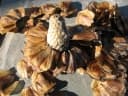
Araucaria heterophylla
Araucaria heterophylla
Safety & Hazards
None known
Cultivation Details
Norfolk Island pine is native to a subtropical island, but is cultivated as an ornamental from the warm temperate zone to the tropics. Succeeds in full sun and in partial shade[1]. Grows well in deep sand, but needs reliable water when young[2]. The plant is tolerant of salt and wind, making it ideal for coastal situations[2]. A slow-growing, but long-lived species[1]. Female cones are produced on trees older than 15 years, and male cones on trees older than 40 years[3]. Prolific seed fall occurs every 4 - 5 years[3]. A dioecious species, both male and female forms need to be grown if fruit and seed are required[2].
Propagation
Seed - Cuttings. Note:- cuttings taken from vigorous upright material will inherit normal upright growth habit, whilst cuttings taken from horizontal branches will root, but will maintain their horizontal growth habit rather than normal upright growth. Cite as: Tropical Plants Database, Ken Fern. tropical.theferns.info. 2026-02-19. <tropical.theferns.info/viewtropical.php?id=Araucaria+heterophylla>
Pollinators
Wind
References
- [1]KemperCentreForHomeGardeningPlantFinder — Missouri Botanical Garden · http://www.mobot.org/gardeninghelp/plantfinder/ ↩︎Basic cultivation details, plant uses, habitat etc for several thousand species of plants, mainly from the temperate zone.
- [2]Dominica Botanic Gardens — http://www.da-academy.org/trees_shrubs.html ↩︎An on-line resource, providing top quality pictures and some basic information on various plants being grown at the Botanic Gardens, often including uses and habitat.
- [3]The Gymnosperm Database — http://www.conifers.org/index.htm ↩︎A vast amount of information on conifers and families of gymnosperms.
- [4]IUCN Red List of Threatened Species — http://www.iucnredlist.org/ ↩︎A list of plants under threat and facing possible extinction, usually with brief details of the threats and information on habitat.
- [5]Trees of Puerto Rico and the Virgin Islands. Second Volume. — Little E.L.; Woodbury R.O.;Wadsworth F.H. · USDA, Forest Service; Washington. · 1974 ↩︎Contains detailed information, and usually an illustration, on 500 tree species, including both native and exotic species.