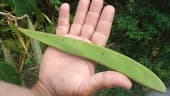
Arapatiella psilophylla
Arapatiella psilophylla
Safety & Hazards
None known
Cultivation Details
Succeeds in fairly dense shade when young, but needing more light and tolerating full sun as it grows older[1]. Prefers a well-drained, fertile, clayey soil[1]. Established plants are drought tolerant[1]. Although many species within the family Fabaceae have a symbiotic relationship with soil bacteria, this species is said to be devoid of such a relationship and therefore does not fix atmospheric nitrogen.
Propagation
Seed - best sown as soon as it is ripe in a partially shaded position in individual containers. A germination rate of more than 50% can be expected, with the seed sprouting within 7 - 14 days[1]. The seedlings should be ready to plant out 6 - 7 months later[1]. Like many species within the family Fabaceae, once they have been dried for storage the seeds of this species may benefit from scarification before sowing in order to speed up germination. This can usually be done by pouring a small amount of nearly boiling water on the seeds (being careful not to cook them!) and then soaking them for 12 - 24 hours in warm water. By this time they should have imbibed moisture and swollen - if they have not, then carefully make a nick in the seedcoat (being careful not to damage the embryo) and soak for a further 12 hours before sowing[PFAF]. Cite as: Tropical Plants Database, Ken Fern. tropical.theferns.info. 2026-02-19. <tropical.theferns.info/viewtropical.php?id=Arapatiella+psilophylla>
Pollinators
Data unavailable
References
- [1]Brazilian Trees. Volume 2. 4th Edition. — Lorenzi. H. · Instituto Plantarum De Estudos Da Flora; Brazil. · 2002 · ISBN 85-86714-15-1 ↩︎Information on 350 species of Brazilian trees. Stunning photographs of each species, brief details on the plant, its uses and how to grow it from seed. A superb work, with the minor irritation that the translation from Portuguese is not of the best.
- [2]IUCN Red List of Threatened Species — http://www.iucnredlist.org/ ↩︎A list of plants under threat and facing possible extinction, usually with brief details of the threats and information on habitat.
- [PFAF]Plants for a Future — pfaf.org ↩︎