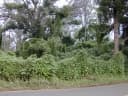
Anredera cordifolia
Anredera cordifolia
Safety & Hazards
None known
Cultivation Details
A plant of subtropical to tropical areas. It is sometimes cultivated in temperate areas, the plant dying down in cold weather but the roots surviving underground and regrowing in the spring. It grows wild in areas where mean temperatures range from 20 - 30°c in the hot season and from 10 - 30°c in the cool season. Average annual rainfall varies from 500 - 2,000mm. The tubers have survived outdoors in a sunny sheltered position for three winters outdoors (as of May 2004) in our gardens in southwest England (hardyness zone 8), the plant coming back into growth in late spring[PFAF]. Requires a well-drained humus-rich soil and a position in full sun or good indirect light[1]. Established plants are drought tolerant[1]. In cold areas it should be possible to grow the plants on an annual basis. Harvest the roots in the autumn after the top growth has been killed by frost and then store them in a cool but frost-free place for the winter, planting then out in late spring (perhaps starting them off in a greenhouse beforehand)[PFAF]. This plant seldom, if ever, produces seeds[2].
Propagation
Seed - we have no information on this plant, but, if seed can be obtained, suggest sowing it in a greenhouse in the spring. Prick out the seedlings into individual pots when they are large enough to handle and grow them on in the greenhouse for at least their first winter. Plant out in spring after the last expected frosts. Softwood cuttings. Division. Dig up the tubers at any time from late autumn to early spring. Store them in a cool but frost-free place and either pot them up in the greenhouse in early spring or plant them directly outside in late spring. Cite as: Temperate Plants Database, Ken Fern. temperate.theferns.info. 2026-02-20. <temperate.theferns.info/plant/Anredera+cordifolia>
Pollinators
Data unavailable
References
- [1]The New RHS Dictionary of Gardening. 1992. — Huxley. A. · MacMillan Press · 1992 · ISBN 0-333-47494-5 ↩︎Excellent and very comprehensive, though it contains a number of silly mistakes. Readable yet also very detailed.
- [2]Flora of China — Missouri Botanical Garden Press; St. Louis. · 1994 · http://flora.huh.harvard.edu/china/ ↩︎An excellent, comprehensive resource in 25 volumes. In addition to the botanical information the flora also gives basic information on habitat and some uses. An on-line version is also available.
- [3]Global Invasive Species Database — http://www.issg.org/database/welcome/ ↩︎Very detailed information on almost 400 species (with more being added) of plants that have become weeds in areas outside their native range.
- [4]Flora of N. America — http://flora.huh.harvard.edu/fna/ ↩︎An on-line version of the flora with an excellent description of the plant including a brief mention of plant uses.
- [5]Cornucopia II — Facciola. S. · Kampong Publications, California. · 1998 · ISBN 0-9628087-2-5 ↩︎The second edition of an excellent guide to the edible uses of plants, though it does not give any details of cultivation etc.
- [6]Vegetables — Phillips. R. & Rix. M. · Macmillan Reference Books, London. · 1995 · ISBN 0 333 62640 0 ↩︎Excellent and easily read book with good information and an excellent collection of photos of vegetables from around the world, including many unusual species.
- [PFAF]Plants for a Future — pfaf.org ↩︎