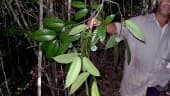
Annona sylvatica
Annona sylvatica
Safety & Hazards
None known
Cultivation Details
A plant of the tropics, where it is found at elevations from sea level to higher elevations in the Brazilian highlands[1]. It might possibly tolerate some frost[1]. Freshly planted young trees usually establish well and grow away rapidly, often reaching 3.5 metres or more within 2 years[2].
Propagation
Seed - best sown as soon as it is ripe, germination rates drop when seed is 3 months or more old[2]. The seed germinated better if it is scarified by carefully nicking the seedcoat to allow ingress of moisture, but being careful not to damage the embryo[2]. Sow the seed in light shade in a nursery seedbed or in containers. Germination rates are usually in excess of 60%, with the seed sprouting within 30 - 60 days[2]. Nursery bed seedlings should be potted up into individual pots once they are 4 - 6cm tall. Plant out into permanent positions about 6 months later[2]. Cite as: Tropical Plants Database, Ken Fern. tropical.theferns.info. 2026-02-19. <tropical.theferns.info/viewtropical.php?id=Annona+sylvatica>
Pollinators
Beetles, Insects
References
- [1]Trade Winds Fruit — http://www.tradewindsfruit.com/index.htm ↩︎The on-line catalogue of a company selling seeds. Gives descriptions, photos and uses of a very wide range of fruit and other food-producing plants plus ornamentals.
- [2]Brazilian Trees. Volume 1. 4th Edition. — Lorenzi. H. · Instituto Plantarum De Estudos Da Flora; Brazil. · 2002 · ISBN 85-86714-17-8 ↩︎Information on 350 species of Brazilian trees. Stunning photographs of each species, brief details on the plant, its uses and how to grow it from seed. A superb work, with the minor irritation that the translation from Portuguese is not of the best.
- [3]Brazilian Fruits and Cultivated Exotics — Lorenzi. H.; Bacher. L.; Lacerda. M.; Sartori. S. · Instituto Plantarum De Estudos Da Flora LTDA; Brazil. · 2000 · ISBN 85-867174-24-0 ↩︎A superb book, giving information on several hundred fruit species. Each entry has a brief description of the plant and its uses, accompanied by one to many excellent quality photographs of the fruits.
- [4]Dictionary of Trees; Volume 2 South America; Nomenclature, Taxonomy and Ecology — Grandtner M.M. & Chevrette J. · Academic Press; London · 2014 · ISBN 978-0-12-396490-8 ↩︎
- [5]IUCN Red List of Threatened Species — http://www.iucnredlist.org/ ↩︎A list of plants under threat and facing possible extinction, usually with brief details of the threats and information on habitat.
- [6]Diccionario das Plantas Uteis do Brasil — Correa M.P. · Imprensa Nacional; Rio de Janeiro · 1926 ↩︎A massive work in 6 volumes giving details of the various uses of Brazilian plants.
- [7]Rollinia — Maas P.J.M. et al · New York Botanical Garden Press · 1992 ↩︎
- [8]Medicinal Plants of Brazil — Mors W.B.; Rizzini C.T.; Pereira N.A. · Reference Publications; Michigan. · 2000 · ISBN 0-917256-42-5 ↩︎An extremely concise book, listing approximately 1,500 species and varieties of plants with their botanical name, common name in Brazil, regions in Brazil where the plant is found, a brief list of uses and any medically active compounds in the plant.