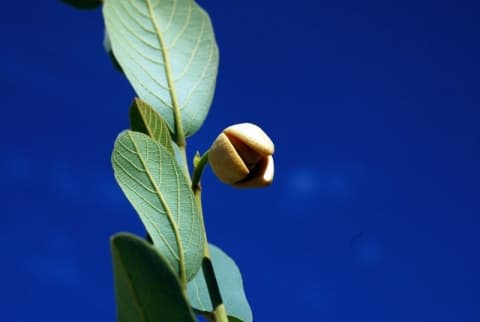
Annona stenophylla
Annona stenophylla
Safety & Hazards
None known
Cultivation Details
Succeeds in full sun and also in light shade[1]. Usually found in the wild growing in deep, sandy soils[1]. Plants can survive fires, resprouting quickly from the underground rhizomes[2, 3].
Propagation
The seed of many species in this genus has a hard seedcoat and may benefit from scarification before sowing in order to speed up germination. This can usually be done by pouring a small amount of nearly boiling water on the seeds (being careful not to cook them!) and then soaking them for 12 - 24 hours in warm water. By this time they should have imbibed moisture and swollen - if they have not, then carefully make a nick in the seedcoat (being careful not to damage the embryo) and soak for a further 12 hours before sowing[PFAF]. Cite as: Tropical Plants Database, Ken Fern. tropical.theferns.info. 2026-02-19. <tropical.theferns.info/viewtropical.php?id=Annona+stenophylla>
Pollinators
Bees, insects
References
- [1]Gemsbok Bean and Kalahari Truffle — Leffers A. · Gamsberg MacMillan; Namibia. · 2003 · ISBN 99916-0-491-X ↩︎Details of the traditional uses of over 200 species of plants in northeastern Namibia. Written for the non-expert, there is usually at least one photograph with each plant entry.
- [2]Flora Zambesiaca — http://apps.kew.org/efloras/fz/intro.html ↩︎An excellent online flora of plants from the Zambezi River basin. It lists a number of the plant uses as well as the habitats and botanical descriptions of the plants.
- [3]Edible Wild Plants of Tanzania — Ruffo, C.K.: Birnie, A. & Tengnas, B. · Regional Land Management Unit; Nairobi. · 2002 · ISBN 9966-896-60-0 ↩︎A very well presented, simple guide to growing and utilizing wild food plants in Tanzania, with line drawings of each plant, a description, habitat and range, non-food as well as food uses, plus basic information on growing the plants.
- [PFAF]Plants for a Future — pfaf.org ↩︎