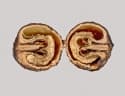
Anamirta cocculus
Anamirta cocculus
Safety & Hazards
The seed, when taken internally, is a powerful poison for all vertebrates affecting the central nervous system, stimulating the motor and inhibitory centres in the medulla, especially the respiratory and vagus centres, acting on the heart and respiration[1]. It also irritates motor centres, either in the cerebrum or in the medulla and cord, producing in all vertebrates alternating epileptiform spasms, with periodic stoppage of the motions of the diaphragm and slowness of the pulse[1]. The poisoning causes vomiting, purging, profuse sweating and intoxication, with extreme giddiness, dimness of vision and unconsciousness[1]. Breathing and the pulse become weak. The poisoning also results in chronic convulsions; during spasms and intervals of relaxations the pupils correspondingly contract or dilate[1]. Death occurs rapidly from respiration failure, or slowly from gastro-intestinal symptoms[1].
Cultivation Details
A plant of the lowland tropics. It prefers a seasonal climate[1]. The plant grows best on volcanic basalt, limestone, calcareous rocks and sandy soils[1]. The dried fruits have long been exported from India to the Near East and Europe[1]. They were known to the physicians of the Arabic schools from the tenth century, and in the following centuries passed on to Europe, obtaining the name 'cocci orientalis'[1]. The plant often bears flowers in abundance, the fragrant smell can be detected by people from 50 metres away[1]. Pollination is probably effected by insects which are attracted by the scent of the flowers[1].
Propagation
Seed - Cite as: Tropical Plants Database, Ken Fern. tropical.theferns.info. 2026-02-19. <tropical.theferns.info/viewtropical.php?id=Anamirta+cocculus>
Pollinators
Insects