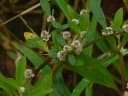
Alternanthera sessilis
Alternanthera sessilis
Safety & Hazards
None known
Cultivation Details
Succeeds in sun or moderate shade[1]. Prefers a loamy, alkaline soil, but can succeed in a wide range of soils[2]. Plants can be grown in moist to wet soil and in shallow water[3]. Alternanthera sessilis is a weed that inhabits many areas of the world. It is a pest of sugarcane, a weed of rice in tropical areas, and an agricultural weed that invades disturbed wet areas in tropical and subtropical regions[4]. A rather variable plant, growing upright in drier soils, but becoming prostrate in wetter conditions with the shoots rooting at the nodes[5].
Propagation
Seed - Division of underground stems. Nodal cuttings. Cite as: Tropical Plants Database, Ken Fern. tropical.theferns.info. 2026-02-19. <tropical.theferns.info/viewtropical.php?id=Alternanthera+sessilis>
Pollinators
Self
References
- [1]Plants and People of Nepal — Manandhar. N. P. · Timber Press. Oregon. · 2002 · ISBN 0-88192-527-6 ↩︎Excellent book, covering over 1,500 species of useful plants from Nepal together with information on the geography and peoples of Nepal. Good descriptions of the plants with terse notes on their uses.
- [2]Traditional Vegetables in Benin — Achigan-Dako E. Et al · Darwin Initiative; International Foundation for Science · 2009 ↩︎Issued as a PDF on the Internet, it contains basic information on over 250 species of plants used for food in Benin.
- [3]Protabase - Plant Resources of Tropical Africa. — http://www.prota.org ↩︎An excellent on-line database with detailed information on over 3,200 species of useful plants of Africa.
- [4]Global Invasive Species Database — http://www.issg.org/database/welcome/ ↩︎Very detailed information on almost 400 species (with more being added) of plants that have become weeds in areas outside their native range.
- [5]Flora of Pakistan — http://www.efloras.org ↩︎As of 2006, there is not much information on habitats available, but it is being developed and promises to be an excellent resource.
- [6]Plant Resources of Southeast Asia — http://proseanet.org/ ↩︎Lots of information on the uses of the plants of SE Asia.
- [7]Dictionary of Economic Plants. — Uphof. J. C. Th. · Weinheim · 1959 · ISBN - ↩︎An excellent and very comprehensive guide but it only gives very short descriptions of the uses without any details of how to utilize the plants. Not for the casual reader.
- [8]Cornucopia II — Facciola. S. · Kampong Publications, California. · 1998 · ISBN 0-9628087-2-5 ↩︎The second edition of an excellent guide to the edible uses of plants, though it does not give any details of cultivation etc.
- [9]Wild edible plants traditionally used by the tribes in the Parambikulam Wildlife Sanctuary, Keala, India — Yesodharan K. & Sujana K.A. · 2007 ↩︎
- [10]Medicinal Plants of the Philippines — Bureau of Plant Industry, Philippines. · http://www.bpi.da.gov.ph/Publications/mp/mplants.html ↩︎An Internet site from the Philippines Department of Agriculture, giving information in a readable way on the medicinal uses of many plants in their area.