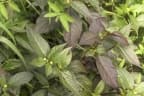
Amaranthaceae FAMILY
Alternanthera brasiliana
Alternanthera brasiliana
Edibility
2/5
Medicinal
2/5
Safety & Hazards
None known
Cultivation Details
HabitPerennial
Growth—
Grows best in a sunny position[1]. Succeeds in most well-drained but moderately moist soils[1]. The plant often self-seeds in the garden and can become weedy[1]. The stems of the plant, when discarded, can form roots and develop into a new plant[2]. It has escaped from cultivation and become naturalized in some areas[3]. Plants can flower all year round[1].
Propagation
Seed - it can remain dormant in the soil for a long time[2]. Cite as: Tropical Plants Database, Ken Fern. tropical.theferns.info. 2026-02-19. <tropical.theferns.info/viewtropical.php?id=Alternanthera+brasiliana>
Pollinators
Data unavailable
References
- [1]Tropical Flowering Plants. A Guide to Identification and Cultivation. — Llamas K.A. · Timber Press; Oregon. · 2003 · ISBN 0-88192-585-3 ↩︎A terse guide for the gardener to almost 1,500 species of ornamental tropical plants with brief details on their cultivation and, usually, a small photograph of good quality.
- [2]Pacific Island Ecosystems at Risk — http://www.hear.org/pier/scientificnames/index.html ↩︎A very good website detailing weed species that have been introduced into the Pacific Islands.
- [3]Traditional Vegetables in Benin — Achigan-Dako E. Et al · Darwin Initiative; International Foundation for Science · 2009 ↩︎Issued as a PDF on the Internet, it contains basic information on over 250 species of plants used for food in Benin.
- [4]Plant Resources of Southeast Asia — http://proseanet.org/ ↩︎Lots of information on the uses of the plants of SE Asia.
- [5]Medicinal Plants of the Guianas — DeFilipps, R. A.; Maina, S. L.; & Crepin, J. · Smithsonian Museum · http://botany.si.edu/bdg/medicinal/index.html ↩︎A down-loadable PDF document of a book in pre-publication awaiting illustration. An excellent, if rather terse, guide to the traditional medicinal uses of the plants of the region