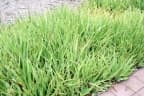
Aloe vera
Aloe vera
Safety & Hazards
Aloe vera is very widely used as a herbal remedy. Whilst the leaf gel is entirely safe, the bitter aloes found at the base of the leaves contain anthraquinones which have potential problems if used in excess. The possible side effects of anthraquinones include congestion and irritation of the pelvic organs[1]. Anthraquinone laxatives may also play a role in development of colorectal cancer as they have genotoxic potential, and tumorigenic potential[1].
Cultivation Details
Aloe vera can be grown outdoors from the warm temperate zone to the tropics. It grows best in areas where annual daytime temperatures are within the range 19 - 27°c, but can tolerate 10 - 35°c[2]. It can tolerate occasional, light, short-lived frosts, experincing only slight damage at -3°c so long as conditions are fairly dry[1, PFAF]. It prefers a mean annual rainfall in the range 1,900 - 3,000mm, but tolerates 700 - 4,000mm[2]. During the winter months in the subtropics, the plant becomes dormant and utilizes very little moisture[1]. Prefers a sunny position, but can tolerate light shade[1]. Requires a well-drained soil, preferring one that is sandy or loamy[1]. Prefers a rich soil, but is tolerant of poor soils[3, 1]. Tolerates some salinity in the soil[1]. Prefers a pH in the range 6.5 - 7.5, tolerating 6 - 8[2]. Established plants will survive drought quite well even though the root system is relatively shallow[1]. Aloe vera plants take about 3 years to attain harvestable size, and then leaves can be harvested for about seven years. The exudate is collected by cutting off the leaves transversely close to the stem and positioning them in such a way that the juice drains into pots, tubs, vessels or even a simple canvas placed over a depression in the ground. The exudate may also be obtained by squeezing the leaves or by warm or cold water retting. The leaves are usually cut in the morning and it takes 4 - 5 hours for the juice to drain from a pile of leaves. Only older leaves are cut; younger ones and growing tips are spared[1]. For gel production, the leaves are cut at intervals of about 3 months. The youngest leaves, less than 25cm long, are not suitable because of their low gel content, but the leaves should not be too old because gel quantity and quality may decline[1]. In Africa, Aloe vera flowers and produces fruits normally, but elsewhere fruit formation is rare. Failure to set fruit is presumed to be caused by pollen sterility and self-incompatibility. Birds are the most important pollinators of Aloe species, but in Africa honeybees also play a role[1]. Aloe species follow the Crassulacean acid metabolism (CAM). CAM plants can fix carbon dioxide at night and photosynthesize with closed stomata during the day, thus minimizing water loss. This, plus their succulent leaves and stems, and the presence of a thick cuticle, makes them well adapted to dry conditions[1].
Propagation
Seed - sow spring in a warm greenhouse. The seed usually germinates in 1 - 6 months at 16°c. Prick out the seedlings into individual pots of very well-drained soil when they are large enough to handle. Grow them on in a sunny part of the greenhouse for at least their first two winters. If trying them outdoors then plant them out in early summer to allow them to become established before the winter, and give them some protection from the cold in winter[PFAF]. Division of offsets when available, usually in spring. The plants produce offsets quite freely and they can be divided at any time of the year as long as it is warm enough to encourage fresh root growth to allow re-establishment of the plants[PFAF]. Pot up and grow on in the greenhouse until established. Cite as: Temperate Plants Database, Ken Fern. temperate.theferns.info. 2026-02-20. <temperate.theferns.info/plant/Aloe+vera>
Pollinators
Data unavailable
References
- [1]Protabase - Plant Resources of Tropical Africa. — http://www.prota.org ↩︎An excellent on-line database with detailed information on over 3,200 species of useful plants of Africa.
- [2]Ecocrop — http://ecocrop.fao.org/ecocrop/srv/en/home ↩︎Basic information on a wide range of useful plants, plus details of environmental needs where available.
- [3]The New RHS Dictionary of Gardening. 1992. — Huxley. A. · MacMillan Press · 1992 · ISBN 0-333-47494-5 ↩︎Excellent and very comprehensive, though it contains a number of silly mistakes. Readable yet also very detailed.
- [4]Flora Europaea — ? · Cambridge University Press · 1964 · ISBN - ↩︎An immense work in 6 volumes (including the index). The standard reference flora for Europe, it is very terse though and with very little extra information. Not for the casual reader.
- [5]Tanaka's Cyclopedia of Edible Plants of the World. — Tanaka. T. & Nakao S. · Keigaku Publishing; Tokyo · 1976 · ISBN - ↩︎The most comprehensive list of edible plants I've come across. Only the briefest entry for each species, though, and some of the entries are more than a little dubious. Not for the casual reader.
- [6]Plants for Human Consumption. — Kunkel. G. · Koeltz Scientific Books · 1984 · ISBN 3874292169 ↩︎An excellent book for the dedicated. A comprehensive listing of Latin names with a brief list of edible parts.
- [7]Cornucopia - A Source Book of Edible Plants. — Facciola. S. · Kampong Publications · 1990 · ISBN 0-9628087-0-9 ↩︎Excellent. Contains a very wide range of conventional and unconventional food plants (including tropical) and where they can be obtained (mainly N. American nurseries but also research institutes and a lot of other nurseries from around the world.
- [8]The Encyclopedia of Medicinal Plants — Chevallier. A. · Dorling Kindersley. London · 1996 · ISBN 9-780751-303148 ↩︎An excellent guide to over 500 of the more well known medicinal herbs from around the world.
- [9]Encyclopaedia of Herbs and their Uses. — Bown. D. · Dorling Kindersley, London. · 1995 · ISBN 0-7513-020-31 ↩︎A very well presented and informative book on herbs from around the globe. Plenty in it for both the casual reader and the serious student. Just one main quibble is the silly way of having two separate entries for each plant.
- [10]Medicinal Plants of Nepal — Dept. of Medicinal Plants. Nepal. · 1993 · ISBN - ↩︎Terse details of the medicinal properties of Nepalese plants, including cultivated species and a few imported herbs.
- [11]A Modern Herbal. — Grieve. · Penguin · 1984 · ISBN 0-14-046-440-9 ↩︎Not so modern (1930's?) but lots of information, mainly temperate plants.
- [12]The Herb Book. — Lust. J. · Bantam books · 1983 · ISBN 0-553-23827-2 ↩︎Lots of information tightly crammed into a fairly small book.
- [13]Dictionary of Economic Plants. — Uphof. J. C. Th. · Weinheim · 1959 · ISBN - ↩︎An excellent and very comprehensive guide but it only gives very short descriptions of the uses without any details of how to utilize the plants. Not for the casual reader.
- [14]Plants for Man. — Schery. R. W. ↩︎Fairly readable but not very comprehensive. Deals with plants from around the world.
- [15]A Dictionary of Plants Used by Man. — Usher. G. · Constable · 1974 · ISBN 0094579202 ↩︎Forget the sexist title, this is one of the best books on the subject. Lists a very extensive range of useful plants from around the world with very brief details of the uses. Not for the casual reader.
- [16]The Dictionary of Modern Herbalism. — Mills. S. Y. ↩︎An excellent small herbal.
- [17]Handbook of Chinese Herbs and Formulas. — Yeung. Him-Che. · Institute of Chinese Medicine, Los Angeles · 1985 · ISBN - ↩︎An excellent Chinese herbal giving information on over 500 species. Rather technical and probably best suited to the more accomplished user of herbs.
- [18]Medicinal Plants of China — Duke. J. A. and Ayensu. E. S. · Reference Publications, Inc. · 1985 · ISBN 0-917256-20-4 ↩︎Details of over 1,200 medicinal plants of China and brief details of their uses. Often includes an analysis, or at least a list of constituents. Heavy going if you are not into the subject.
- [19]Useful Fiber Plants of the World — Dodge C.R. · USDA; Washington. · 1897 · http://www.biodiversitylibrary.org/ ↩︎A rather dated, but very comprehensive catalogue of fibre plants from around the world. The book can be downloaded from the Internet.
- [20]Eco-Friendly House Plants. — Wolverton. B. C. · Weidenfeld & Nicolson. London. · 1996 · ISBN 0-297-83484-3 ↩︎Excellent guide to pollution in the home and those plants that can help to remove the problem. Most of the plants are not hardy outdoors in the temperate zone, though a number of species can be grown outside.
- [PFAF]Plants for a Future — pfaf.org ↩︎