Cultivation Details
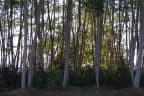
A plant of low to moderate elevations in humid tropical and subtropical monsoon climates. It is found at elevations up to 1,800 metres. It grows best in areas where annual daytime temperatures are within the range 22 - 32°c, but can tolerate 15 - 45°c[2]. It can tolerate occasional, short-lived, light frosts[3]. It prefers a mean annual rainfall in the range 2,500 - 3,500mm, but tolerates 1,000 - 5,000mm[2]. Requires a sunny position[2]. The tree is adapted to poor soils, high pH, is fairly salt-tolerant and thrives on lateritic alluvial soil and sandy mining areas[3]. Prefers a pH in the range 5.5 - 7.3, tolerating 4.5 - 8.5[2]. The tree has proved to be invasive in many of the areas into which it has been introduced[4]. Trees tolerate frequent pruning[3]. This species has a symbiotic relationship with certain soil bacteria, these bacteria form nodules on the roots and fix atmospheric nitrogen. Some of this nitrogen is utilized by the growing plant but some can also be used by other plants growing nearby[5].
Propagation
Seed - requires pre-treatment. The seed has a hard seedcoat and needs to be scarified to allow water to permeate. This can be done by abrading the seed coat or softening it by soaking it in water. A common method is to pour a small amount of boiling water over the seed, so that the water cools quickly enough not to cook and kill the seed. Then soak the seed in warm water for 12 - 24 hours prior to sowing[PFAF]. Seedlings can be transplanted into the field when they are 6 - 8 weeks old[3]. Cite as: Tropical Plants Database, Ken Fern. tropical.theferns.info. 2026-02-19. <tropical.theferns.info/viewtropical.php?id=Albizia+chinensis>
Pollinators
Insects
References
- [1]A Field Guide to Forest Trees of Northern Thailand — Gardener S.; Sidisunthorn P.; Anusarnsunthorn V. · Kobfai Publishing Project; Bangkok. · 2000 · ISBN 974-7799-01-4 ↩︎An excellent, concise guide to 430 species, plus notes on another 450 species. Excellent photographs and a separate section on distribution and plant uses.
- [2]Ecocrop — http://ecocrop.fao.org/ecocrop/srv/en/home ↩︎Basic information on a wide range of useful plants, plus details of environmental needs where available.
- [3]World Agroforesty Centre — http://www.worldagroforestry.org/ ↩︎An excellent online database of a huge range of trees giving very good information on each plant - its uses, ecology, identity, propagation, pests etc.
- [4]Pacific Island Ecosystems at Risk — http://www.hear.org/pier/scientificnames/index.html ↩︎A very good website detailing weed species that have been introduced into the Pacific Islands.
- [5]The New RHS Dictionary of Gardening. 1992. — Huxley. A. · MacMillan Press · 1992 · ISBN 0-333-47494-5 ↩︎Excellent and very comprehensive, though it contains a number of silly mistakes. Readable yet also very detailed.
- [6]Flora Malesiana Series 1 — Various · Nationaal Herbarium Nederiand, Universiteit Leiden branch · http://www.archive.org ↩︎A massive treatment of the plants of the Malaysian Archipelago. Much of it has been made available to download from the Internet
- [7]Plant Resources of Southeast Asia — http://proseanet.org/ ↩︎Lots of information on the uses of the plants of SE Asia.
- [8]Flora of China — Missouri Botanical Garden Press; St. Louis. · 1994 · http://flora.huh.harvard.edu/china/ ↩︎An excellent, comprehensive resource in 25 volumes. In addition to the botanical information the flora also gives basic information on habitat and some uses. An on-line version is also available.
- [PFAF]Plants for a Future — pfaf.org ↩︎