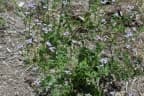
Ageratum conyzoides
Ageratum conyzoides
Safety & Hazards
None known
Cultivation Details
Ageratum conyzoides is not frost hardy, though it can be grown as a summer annual in many areas of the temperate zone[1] Succeeds in full sun in a sheltered position in any reasonably fertile moisture-retentive soil that does not dry out in the summer[1]. Plants are reasonably tolerant of shade, though can be outcompeted by taller plants[2]. Plant vigour and flowering periods are much reduced on dry soils[1]. The plant is a common weed in the tropics[1]. It can flower and produce fruit all year round; individual plants can produce 40,000 seeds and, in some areas, one-half of the seeds will germinate shortly after they are shed. Seeds are mainly spread by wind and water and will germinate under a wide range of conditions[2]. The fresh plant is malodorous[1].
Propagation
Seed - sow late winter or early spring in a warm greenhouse and only just cover the seed. Prick out the seedlings when large enough to handle and plant out after the last expected frosts[1]. Seed can also be sown in situ in the spring and, for earlier blooms, it is possible to sow it in late summer or early autumn, though it will need to be overwintered in a warm greenhouse[1]. Cite as: Temperate Plants Database, Ken Fern. temperate.theferns.info. 2026-02-20. <temperate.theferns.info/plant/Ageratum+conyzoides>
Pollinators
Insects
References
- [1]The New RHS Dictionary of Gardening. 1992. — Huxley. A. · MacMillan Press · 1992 · ISBN 0-333-47494-5 ↩︎Excellent and very comprehensive, though it contains a number of silly mistakes. Readable yet also very detailed.
- [2]Pacific Island Ecosystems at Risk — http://www.hear.org/pier/scientificnames/index.html ↩︎A very good website detailing weed species that have been introduced into the Pacific Islands.
- [3]Medicinal Plants in Papua New Guinea — World Health Organisation · 2009 · ISBN 978-92-9061-249-0 ↩︎Traditional medicinal uses of 126 species from Papua New Guinea, including information on modern research into the plants.
- [4]Plants and People of Nepal — Manandhar. N. P. · Timber Press. Oregon. · 2002 · ISBN 0-88192-527-6 ↩︎Excellent book, covering over 1,500 species of useful plants from Nepal together with information on the geography and peoples of Nepal. Good descriptions of the plants with terse notes on their uses.
- [5]Medicinal Plants in Vietnam — Nguyen Van Dan & Doan Thi Nhu · World Health Organisation · 1989 · ISBN 92 9061 101 4 ↩︎An excellent book, giving information on over 200 plants, their medicinal compounds and applications.
- [6]Traditional Vegetables in Benin — Achigan-Dako E. Et al · Darwin Initiative; International Foundation for Science · 2009 ↩︎Issued as a PDF on the Internet, it contains basic information on over 250 species of plants used for food in Benin.
- [7]Medicinal Plants in the South Pacific — WHO Regional Publications, Manilla. · 1998 · ISBN 92-9061-118-9 ↩︎Excellent guide to 102 medicinal herbs of the Pacific Islands, with photographs of each plant and details of their constituents, biological activities and traditional uses. A description of each plant, together with habitat and distribution is given.
- [8]Glossary of Indian Medicinal Plants (Including the Supplement). — Chopra. R. N., Nayar. S. L. and Chopra. I. C. · Council of Scientific and Industrial Research, New Delhi. · 1986 · ISBN - ↩︎Very terse details of medicinal uses of plants with a wide range of references and details of research into the plants chemistry. Not for the casual reader.
- [9]Medicinal Plants of Nepal — Dept. of Medicinal Plants. Nepal. · 1993 · ISBN - ↩︎Terse details of the medicinal properties of Nepalese plants, including cultivated species and a few imported herbs.