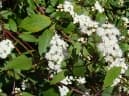
Ageratina riparia
Ageratina riparia
Safety & Hazards
The plant is suspected of causing mortality in horses feeding on it in southern Queensland. It is said to cause lung lesions, resulting in chronic eosinophilic bronchiolitis[1].
Cultivation Details
The plant is damaged by frost[1]. Tolerant of shade[2]. The plant is often grown as an ornamental. It frequently escapes from cultivation and has become naturalized in many parts of the world. It can form dense, quasi monospecific stands which crowd out native plants, limiting their regeneration[3]. It has been declared a 'noxious weed' in parts of N. America, and is a troublesome weed in Java, Thailand, India, Sri Lanka, Australia and Hawaii[1]. Each plant may produce up to 100,000 seeds per year, these seeds are very light and easily dispersed by the wind - 75% of fresh seed may germinate within a week. Germination is promoted by light and inhibited by burial. In some wet highland areas the plant has spread into pastures and reduced their carrying capacity considerably[1, 4] The plant has allelopathic effects on crops with chemicals from the leaf-litter suppressing the growth of other plants[2]. It is difficult to kill using herbicides only, but it can be controlled by brushing, followed by spraying with a herbicide, burning the area and sowing a leguminous cover crop[1]. Biological control using white smut (Entyloma ageratinae) has been effective at elevations of 500 - 2,000 metres in Hawaii[1].
Propagation
Seed - best sown on the surface and not allowed to dry out. Germination is reduced if the seed is covered by more than a very thin sprinkling of soil[1]. Cite as: Tropical Plants Database, Ken Fern. tropical.theferns.info. 2026-02-19. <tropical.theferns.info/viewtropical.php?id=Ageratina+riparia>
Pollinators
Insects
References
- [1]Plant Resources of Southeast Asia — http://proseanet.org/ ↩︎Lots of information on the uses of the plants of SE Asia.
- [2]Pacific Island Ecosystems at Risk — http://www.hear.org/pier/scientificnames/index.html ↩︎A very good website detailing weed species that have been introduced into the Pacific Islands.
- [3]Global Invasive Species Database — http://www.issg.org/database/welcome/ ↩︎Very detailed information on almost 400 species (with more being added) of plants that have become weeds in areas outside their native range.
- [4]Flowers of India — http://www.flowersofindia.net/ ↩︎A wed site of native Indian plants, plus cultivated and naturalized species. It has good quality photos and terse details on more than 3,000 species and cultivars.