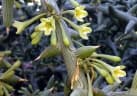
Passifloraceae FAMILY
Adenia globosa
Adenia globosa
Edibility
0/5
Medicinal
2/5
Cultivation Details
HabitDeciduous Climber
Growth—
A plant of drier areas in the tropics, where it can be found at elevations up to 1,800 metres. The plant can be damaged if temperatures fall below 7°c and does not grow well below 15°c[2]. Succeeds in full sun and light shade[3, 2]. Requires a well-drained soil[3].
Propagation
Seed - Cite as: Tropical Plants Database, Ken Fern. tropical.theferns.info. 2026-02-19. <tropical.theferns.info/viewtropical.php?id=Adenia+globosa>
Pollinators
Data unavailable
References
- [1]Protabase - Plant Resources of Tropical Africa. — http://www.prota.org ↩︎An excellent on-line database with detailed information on over 3,200 species of useful plants of Africa.
- [2]Desert Tropicals — http://www.desert-tropicals.com/ ↩︎The main focus of the site is succulent plants, but it also contains information on a wide range of other species. Usually at least one good photograph, plus basic information about the plant and its cultivation.
- [3]Bihrmann's Caudiciforms — http://www.bihrmann.com/caudiciforms/ ↩︎An internet site giving information on caudiciform plants (plants with swollen stem bases such as the Baobab tree, cycads and many succulents). Excellent photos, usually of cultivated plants in pots.