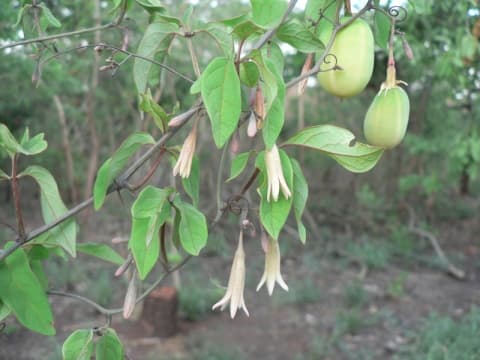
Adenia digitata
Adenia digitata
Safety & Hazards
The whole plant is deadly poisonous. The tuber contains cyanogenic glycosides, mainly tetraphyllin B (barterioside), and the very potent toxin modeccin, a toxalbumin, which inhibits protein synthesis in vitro[1]. The fruit has been used for committing homicide; it is also eaten or a root extract is drunk as a suicide poison[1]. Accidental poisoning mainly occurs when the root is mistaken for edible tubers, particularly those of Coccinia species[1]. Children are often poisoned as a result of eating the attractive fruit[1].
Cultivation Details
A plant of drier areas in the tropics, where it can be found at elevations up to 1,850 metres. The plant is not frost tolerant, being damaged at temperatures below 4°c[2]. Succeeds in a sunny to lightly shaded position and a well-drained soil[3, 2]. A dioecious species, both male and female forms need to be grown if fruit and seed are required.
Propagation
Seed - Cite as: Tropical Plants Database, Ken Fern. tropical.theferns.info. 2026-02-19. <tropical.theferns.info/viewtropical.php?id=Adenia+digitata>
Pollinators
Data unavailable
References
- [1]Protabase - Plant Resources of Tropical Africa. — http://www.prota.org ↩︎An excellent on-line database with detailed information on over 3,200 species of useful plants of Africa.
- [2]Desert Tropicals — http://www.desert-tropicals.com/ ↩︎The main focus of the site is succulent plants, but it also contains information on a wide range of other species. Usually at least one good photograph, plus basic information about the plant and its cultivation.
- [3]Bihrmann's Caudiciforms — http://www.bihrmann.com/caudiciforms/ ↩︎An internet site giving information on caudiciform plants (plants with swollen stem bases such as the Baobab tree, cycads and many succulents). Excellent photos, usually of cultivated plants in pots.