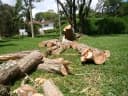
Acrocarpus fraxinifolius
Acrocarpus fraxinifolius
Safety & Hazards
None known
Cultivation Details
Shingle tree grows best in submontane areas in the humid and subhumid tropics with a short, dry spell[1]. It succeeds at elevations from sea level to about 2,000 metres, growing best in areas where the annual precipitation is between 500 - 3,000 mm and the temperature ranges between 15 - 26°c[1]. Plants are very sensitive to frost[1]. Prefers a fertile soil and a position in full sun, though it can tolerate a small amount of shade, especially when young[2, 1, 3]. Succeeds in acid and alkaline soils[1]. A pioneer species, it regenerates primarily in small, burnt areas, on open patches where fresh soil has been exposed and along newly constructed roads[1]. Shingle tree is quite fast-growing, able to reach heights of up to 3 metres within 12 months from seed[3]. Growth of older trees is still rapid, as observed in Tanzania where the mean annual increment of 13 year old trees was 120cm in height and 19mm in diameter. In Rwanda the mean height of trees was 150cm after 1 year, 4.4 metres after 2 years, 6.7 metres after 3 years, and 19 metres after 24 years with a bole diameter of 35cm[4]. A deep rooting plant, the roots can penetrate up to 4.5 metres into the soil[1]. It coppices vigorously, the rotation period for fuel is 8 - 10 years and for timber 30 - 40 years[1]. The tree competes with crops if grown in fields[1]. Young plants have been observed to behave as climbers and stranglers of other trees[3]. The tree is a good source of nectar and a good bee forage[1]. This species has a symbiotic relationship with certain soil bacteria, these bacteria form nodules on the roots and fix atmospheric nitrogen. Some of this nitrogen is utilized by the growing plant but some can also be used by other plants growing nearby[2].
Propagation
Seed - pre-soak for 5 minutes in hot water and leave to soak for 24 hours in warm water before sowing in a shaded bed[1]. Alternatively, pretreat the seed with sulphuric acid for 10 min[1]. A germination of 80 - 95% within only 2 - 7 days is achieved after this pre-treatment[1]. Under natural conditions, some seeds may germinate within a week, while others may lie dormant for a year before germinating. Seedlings are ready for planting out when 3 months old and 30 - 45 cm tall[1]. The seedlings are pricked out into beds or containers and placed in full sunlight[1]. From the beds they can be planted bare-rooted or as stumps or striplings[1]. Seeds exhibit orthodox storage behaviour; they should be stored at low temperatures. A few seeds survived 7 years of storage at room temperature[1]. Patch budding has been used and 80% success recorded during establishment seed orchards[1]. Cite as: Tropical Plants Database, Ken Fern. tropical.theferns.info. 2026-02-19. <tropical.theferns.info/viewtropical.php?id=Acrocarpus+fraxinifolius>
Pollinators
Bees, Insects
References
- [1]World Agroforesty Centre — http://www.worldagroforestry.org/ ↩︎An excellent online database of a huge range of trees giving very good information on each plant - its uses, ecology, identity, propagation, pests etc.
- [2]The New RHS Dictionary of Gardening. 1992. — Huxley. A. · MacMillan Press · 1992 · ISBN 0-333-47494-5 ↩︎Excellent and very comprehensive, though it contains a number of silly mistakes. Readable yet also very detailed.
- [3]Tropical and Subtropical Trees - A Worldwide Encyclopaedic Guide. — Barwick. M. · Thames & Hudson, London · 2004 · ISBN 0-500-51181-0 ↩︎A superb book, very concise and well written, giving a wealth of information on 400 or more species including descriptions, habitat, cultivation details and plant uses. A wealth of colour photographs bring each plant vividly to life.
- [4]Protabase - Plant Resources of Tropical Africa. — http://www.prota.org ↩︎An excellent on-line database with detailed information on over 3,200 species of useful plants of Africa.
- [5]Flora of China — Missouri Botanical Garden Press; St. Louis. · 1994 · http://flora.huh.harvard.edu/china/ ↩︎An excellent, comprehensive resource in 25 volumes. In addition to the botanical information the flora also gives basic information on habitat and some uses. An on-line version is also available.
- [6]Mansfeld's Database of Agricultural and Horticultural Plants — http://mansfeld.ipk-gatersleben.de/pls/htmldb_pgrc/f?p=185:3:4292127278597336 ↩︎Terse details of a huge range of useful plants.