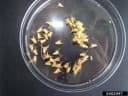
Acanthospermum hispidum
Acanthospermum hispidum
Safety & Hazards
None known
Cultivation Details
Succeeds in a wide range of climates from the temperate to the tropical zones[1]. Succeeds in a wide range of soils, preferring light soils but even succeeding in heavy clays[1]. The plant has become a weed in many areas of the tropics and subtropics[2]. Both the seeds and the leaves contain phenolic acids that are allelopathic to other plants. It is known to invade pastures and out-compete more desirable native species, it is also a weed of crops and a serious contaminant of wool[1]. A prolific seeder, the hooked hairs of the fruit attach easily to the coats of animals, and the fruit is widely distributed by this means[1, 2]. The seeds also float and can be spread by floodwaters[1]. It is classified as a 'Noxious Weed' in some areas[1].
Propagation
Seed - Cite as: Tropical Plants Database, Ken Fern. tropical.theferns.info. 2026-02-19. <tropical.theferns.info/viewtropical.php?id=Acanthospermum+hispidum>
Pollinators
Data unavailable
References
- [1]Pacific Island Ecosystems at Risk — http://www.hear.org/pier/scientificnames/index.html ↩︎A very good website detailing weed species that have been introduced into the Pacific Islands.
- [2]Institute of Food and Agricultural Sciences, University of Florida — University of Florida · http://hort.ifas.ufl.edu/shrubs/ ↩︎PDF fact sheets on over 500 shrubs.
- [3]Dictionary of Economic Plants. — Uphof. J. C. Th. · Weinheim · 1959 · ISBN - ↩︎An excellent and very comprehensive guide but it only gives very short descriptions of the uses without any details of how to utilize the plants. Not for the casual reader.