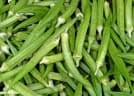
Abelmoschus esculentus
Abelmoschus esculentus
Safety & Hazards
The hairs on the seed pods can be an irritant to some people and gloves should be worn when harvesting. These hairs can be easily removed by washing[1].
Cultivation Details
Abelmoschus esculentus is a plant of tropical to warm temperate regions, with most varieties growing well in the lowland humid tropics up to elevations of 1,000 metres. It is not so well suited to temperate areas, though varieties have been developed that can be grown successfully with a growing season of around 6 months. It grows best in areas where annual daytime temperatures are within the range 20 - 30°c, but can tolerate 12 - 35°c[2]. It prefers a mean annual rainfall in the range 600 - 1,200mm, but tolerates 300 - 2,500mm[2]. This species is not very productive in cooler temperate areas - it sometimes succeeds outdoors in hot summers but is really best grown in a greenhouse since it prefers daytime temperatures of 25°c or more and dislikes low night-time temperatures[3, 4]. Prefers a well-drained humus rich fertile soil in full sun and a pH around 6 to 6.7[1] but it tolerates a wide range of soil types and pH from 5.5 to 8[1]. It prefers a soil with a high potash content[5]. The plant requires a warm sunny position sheltered from winds[1]. It likes plenty of moisture, both in the soil and in the atmosphere[3]. Prefers a pH in the range 5.5 - 7, tolerating 4.5 - 8.7[2]. Most cultivars require about 4 months from sowing before a crop is produced, though some early maturing varieties can produce a crop in 50 days in the tropics[5]. The harvest period may continue up to 180 days[2]. There are some early-maturing varieties that are more tolerant of cooler temperate conditions and these could be tried outdoors[1]. These include 'Clemson's Spineless', 'Emerald Spineless', 'Long Green' and 'Green Velvet'[1]. Yields of green pods are often low, about 2 - 4 tonnes per hectare owing to extreme growing conditiuons, but up to 10 - 40 tonnes may be produced[2]. The flowers are much visited by bees but they may require syringing in order to improve fertilization when plants are grown in a greenhouse. Plants resent being transplanted[3].
Propagation
Seed - sow early spring in a warm greenhouse. The seed germinates in 27 days at 15°c or 6 days at 35°c[3]. When large enough to handle, prick them out into individual pots and plant them out after the last expected frosts[1]. Cite as: Temperate Plants Database, Ken Fern. temperate.theferns.info. 2026-02-20. <temperate.theferns.info/plant/Abelmoschus+esculentus>
Pollinators
Bees
References
- [1]The New RHS Dictionary of Gardening. 1992. — Huxley. A. · MacMillan Press · 1992 · ISBN 0-333-47494-5 ↩︎Excellent and very comprehensive, though it contains a number of silly mistakes. Readable yet also very detailed.
- [2]Ecocrop — http://ecocrop.fao.org/ecocrop/srv/en/home ↩︎Basic information on a wide range of useful plants, plus details of environmental needs where available.
- [3]Growing from Seed. Volume 1. — Rice. G. (Editor) · Thompson and Morgan. · 1987 · ISBN - ↩︎Very readable magazine with lots of information on propagation.
- [4]Conservatory and Indoor Plants Volumes 1 & 2 — Phillips. R. & Rix. M. · Pan Books, London. · 1998 · ISBN 0-330-37376-5 ↩︎Excellent photos of over 1,100 species and cultivars with habits and cultivation details plus a few plant uses. Many species are too tender for outdoors in Britain though there are many that can be grown outside.
- [5]Vegetables — Phillips. R. & Rix. M. · Macmillan Reference Books, London. · 1995 · ISBN 0 333 62640 0 ↩︎Excellent and easily read book with good information and an excellent collection of photos of vegetables from around the world, including many unusual species.
- [6]Cornucopia - A Source Book of Edible Plants. — Facciola. S. · Kampong Publications · 1990 · ISBN 0-9628087-0-9 ↩︎Excellent. Contains a very wide range of conventional and unconventional food plants (including tropical) and where they can be obtained (mainly N. American nurseries but also research institutes and a lot of other nurseries from around the world.
- [7]Sturtevant's Edible Plants of the World. — Hedrick. U. P. · Dover Publications · 1972 · ISBN 0-486-20459-6 ↩︎Lots of entries, quite a lot of information in most entries and references.
- [8]The Vegetable Garden. — Vilmorin. A. · Ten Speed Press · ISBN 0-89815-041-8 ↩︎A reprint of a nineteenth century classic, giving details of vegetable varieties. Not really that informative though.
- [9]Glossary of Indian Medicinal Plants (Including the Supplement). — Chopra. R. N., Nayar. S. L. and Chopra. I. C. · Council of Scientific and Industrial Research, New Delhi. · 1986 · ISBN - ↩︎Very terse details of medicinal uses of plants with a wide range of references and details of research into the plants chemistry. Not for the casual reader.
- [10]Protabase - Plant Resources of Tropical Africa. — http://www.prota.org ↩︎An excellent on-line database with detailed information on over 3,200 species of useful plants of Africa.
- [11]Flora of the USSR. — Komarov. V. L. · Israel Program for Scientific Translation · 1968 · http://www.biodiversitylibrary.org · ISBN - ↩︎An immense (25 or more large volumes) and not yet completed translation of the Russian flora. Full of information on plant uses and habitats but heavy going for casual readers. It can be downloaded from the Internet.
- [12]Eat the Weeds. — Harris. B. C. · Pivot Health · 1973 · ISBN - ↩︎Interesting reading.
- [13]Plants for Human Consumption. — Kunkel. G. · Koeltz Scientific Books · 1984 · ISBN 3874292169 ↩︎An excellent book for the dedicated. A comprehensive listing of Latin names with a brief list of edible parts.
- [14]Edible Leaves of the Tropics — Martin. F. W.; Ruberte. R. M. & Meitzner. L. S. · Echo. USA. · 1998 · ISBN 0-9653360-1-8 ↩︎A terse guide, giving reasonable detail on the more common leaf crops and brief information on a wide range of lesser known plants.
- [15]Wild Food in Australia. — Cribb. A. B. and J. W. · Fontana · 1976 · ISBN 0-00-634436-4 ↩︎A very good pocket guide.
- [16]A Modern Herbal. — Grieve. · Penguin · 1984 · ISBN 0-14-046-440-9 ↩︎Not so modern (1930's?) but lots of information, mainly temperate plants.
- [17]The Herb Book. — Lust. J. · Bantam books · 1983 · ISBN 0-553-23827-2 ↩︎Lots of information tightly crammed into a fairly small book.
- [18]Plants and People of Nepal — Manandhar. N. P. · Timber Press. Oregon. · 2002 · ISBN 0-88192-527-6 ↩︎Excellent book, covering over 1,500 species of useful plants from Nepal together with information on the geography and peoples of Nepal. Good descriptions of the plants with terse notes on their uses.
- [19]Edible Wild Plants of Tanzania — Ruffo, C.K.: Birnie, A. & Tengnas, B. · Regional Land Management Unit; Nairobi. · 2002 · ISBN 9966-896-60-0 ↩︎A very well presented, simple guide to growing and utilizing wild food plants in Tanzania, with line drawings of each plant, a description, habitat and range, non-food as well as food uses, plus basic information on growing the plants.
- [20]Plants for Man. — Schery. R. W. ↩︎Fairly readable but not very comprehensive. Deals with plants from around the world.
- [21]A Dictionary of Plants Used by Man. — Usher. G. · Constable · 1974 · ISBN 0094579202 ↩︎Forget the sexist title, this is one of the best books on the subject. Lists a very extensive range of useful plants from around the world with very brief details of the uses. Not for the casual reader.
- [22]A Weavers Garden — Buchanan. R. · McGraw-Hill Contemporary · 1987 · ISBN 0934026289 ↩︎Covers all aspects of growing your own clothes, from fibre plants to dyes.
- [23]The Useful Plants of the Island of Guam — Safford W.E. · Smithsonian Institute; Washington. · 1905 · http://www.biodiversitylibrary.org/ ↩︎A very comprehensive, if rather dated, guide to the plants of Guam. It can be downloaded from the Internet.
- [24]Economic Botany. — Hill. A. F. · The Maple Press · 1952 · ISBN - ↩︎Not very comprehensive, but it is quite readable and goes into some detail about the plants it does cover.
- [25]Plant Fibres for Papermaking. — Bell. L. A. · Liliaceae Press · 1988 · ISBN - ↩︎A good practical section on how to make paper on a small scale plus details of about 75 species (quite a few of them tropical) that can be used.
- [26]Chinese Materia Medica. — Stuart. Rev. G. A. · Taipei. Southern Materials Centre · 1911 · ISBN - ↩︎A translation of an ancient Chinese herbal. Fascinating.
- [27]CosIng — http://ec.europa.eu/growth/tools-databases/cosing/ ↩︎CosIng is the European Commission database for information on cosmetic substances and ingredients.