Symplocos — 31 species
Botanical species in the genus Symplocos recorded in the PlantPeers database.


Symplocos adenophylla
Symplocos adenophylla
Family: Symplocaceae
Cultivation
The plant is often found in the wild in Kerangas forest - a type of moist, heath forest found on acidic, sandy soils that are low in nutrients, especially nitrogen.
Full cultivation guide →Symplocos celastrifolia
Symplocos celastrifolia
Family: Symplocaceae
Cultivation
The fruits are obviously buoyant, the sterile cells being large and filled with air, allowing the seed to becarried by water to new areas.
Full cultivation guide →Symplocos cerasifolia
Symplocos cerasifolia
Family: Symplocaceae
Cultivation
The plant is often found in the wild in Kerangas forest - a type of moist, heath forest found on acidic, sandy soils that are low in nutrients, especially nitrogen.
Full cultivation guide →
Symplocos fasciculata
Symplocos fasciculata
Family: Symplocaceae
Cultivation
A plant of low to moderate elevations in the moist tropics, where it can be found at elevations up to 2,200,metres. The plant is rather indifferent to soils in the wild, being found on latosols, sand, sandstone, black soils and seasonally swampy land.
Full cultivation guide →Symplocos henschelii
Symplocos henschelii
Family: Symplocaceae
Cultivation
The plant is often found in the wild in Kerangas forest - a type of moist, heath forest found on acidic, sandy soils that are low in nutrients, especially nitrogen.
Full cultivation guide →
Symplocos microcalyx
Symplocos microcalyx
Family: Symplocaceae
Cultivation
Succeeds in a sunny position in any well-drained fertile neutral to acid soil. Self-sterile, it needs cross-pollination with a different plant in the same species if seed and fruit are to be produced. Plants in this genus are notably resistant to honey fungus.
Full cultivation guide →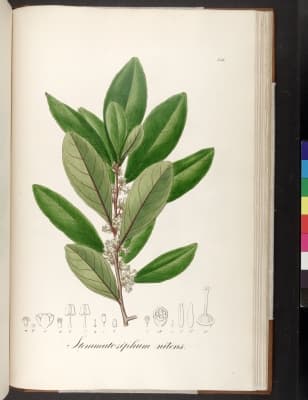
Symplocos nitens
Symplocos nitens
Family: Symplocaceae
Cultivation
Succeeds in full sun to dappled shade. Prefers a well-drained soil. Even when young, the plant has a slow rate of growth.
Full cultivation guide →Symplocos oblongifolia
Symplocos oblongifolia
Family: Symplocaceae
Cultivation
Requires a sunny position. Usually found in well-drained soils in the wild. Young plants have a moderate rate of growth.
Full cultivation guide →
Symplocos paniculata
Symplocos paniculata
Family: Symplocaceae
Cultivation
Symplocos paniculata, at least forms from the northern parts of its range, is a cold-hardy plan, tolerting winter temperatures that can fall below -15°c for short periods. However, the plant also needs hot summers if it is to thrive, often failing in mild, maritime regions. The fruits are sometimes spoiled by early autumn frosts.
Full cultivation guide →Symplocos platyphylla
Symplocos platyphylla
Family: Symplocaceae
Cultivation
A dioecious species, both male and female forms need to be grown if fruit and seed are required.
Full cultivation guide →Symplocos polyandra
Symplocos polyandra
Family: Symplocaceae
Cultivation
The plant is often found in the wild in Kerangas forest - a type of moist, heath forest found on acidic, sandy soils that are low in nutrients, especially nitrogen.
Full cultivation guide →Symplocos pubescens
Symplocos pubescens
Family: Symplocaceae
Cultivation
A dioecious species, both male and female forms need to be grown if fruit and seed are required.
Full cultivation guide →Symplocos rubiginosa
Symplocos rubiginosa
Family: Symplocaceae
Cultivation
The plant is often found in the wild in Kerangas forest - a type of moist, heath forest found on acidic, sandy soils that are low in nutrients, especially nitrogen.
Full cultivation guide →
Symplocos sumuntia
Symplocos sumuntia
Family: Symplocaceae
Cultivation
Species in this genus generaly succeed in a sunny position in any well-drained fertile neutral to acid soil. Self-sterile, it needs cross-pollination with a different plant in the same species if seed and fruit are to be produced. Plants in this genus are notably resistant to honey fungus.
Full cultivation guide →Symplocos tinctoria
Symplocos tinctoria
Family: Symplocaceae
Cultivation
This species is not very cold-hardy in much of the temperate zone. Easily grown in any fertile soil. Prefers a sunny position in a well-drained fertile acid to neutral soil.
Full cultivation guide →
Symplocos uniflora
Symplocos uniflora
Family: Symplocaceae
Cultivation
Grows best in a sunny position. Prefers a moist soil. Young plants have a rapid rate of growth.
Full cultivation guide →