Smilax — 29 species
Botanical species in the genus Smilax recorded in the PlantPeers database.
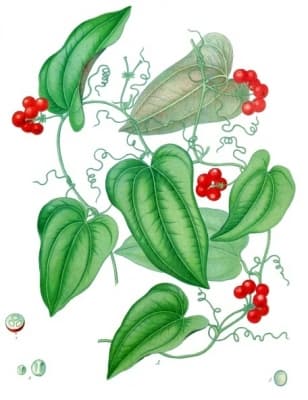

Smilax aspera
Smilax aspera
Family: Smilacaceae
Cultivation
Smilax aspera is a plant of the warm temperate zone moving into the tropics in India, Sri Lanka and Myanmar. It is not a very cold-hardy plant, being able to tolerate short periods with temperatures down to around -10°c when fully dormant. Succeeds in most soils in sun or semi-shade.
Full cultivation guide →
Smilax auriculata
Smilax auriculata
Family: Smilacaceae
Cultivation
Succeeds in most soils in sun or semi-shade. A dioecious species - both male and female forms must be grown if fruit and seed are required.
Full cultivation guide →Smilax bona-nox
Smilax bona-nox
Family: Smilacaceae
Cultivation
Succeeds in most soils in sun or semi-shade. A dioecious species - both male and female forms must be grown if fruit and seed are required.
Full cultivation guide →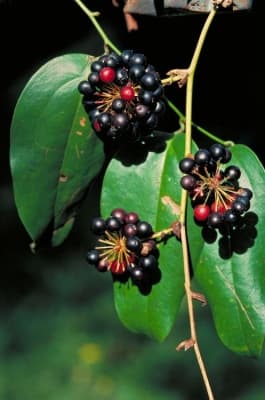
Smilax china
Smilax china
Family: Smilacaceae
Cultivation
Smilax china is hardy to about -15°c. Succeeds in most well-drained soils in sun or semi-shade. A young plant is growing and thriving close to a west-facing wall at Kew Botanical gardens.
Full cultivation guide →Smilax cordifolia
Smilax cordifolia
Family: Smilacaceae
Cultivation
Smilax cordifolia is native to central and southernf Mexico, and so will experience climates ranging from subtropical to tropical, Succeeds in most soils in sun or semi-shade. A dioecious species - both male and female forms must be grown if fruit and seed are required.
Full cultivation guide →Smilax discotis
Smilax discotis
Family: Smilacaceae
Cultivation
Smilax discotis is not very cold-hardy, tolerating short-lived temperatures down to about -10°c and succeeding outdoors in milder parts of the temperate zone. Succeeds in most soils in sun or semi-shade. A dioecious species - both male and female forms must be grown if fruit and seed are required.
Full cultivation guide →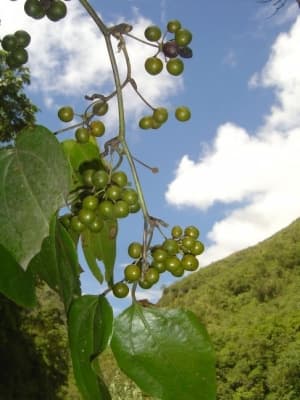
Smilax febrifuga
Smilax febrifuga
Family: Smilacaceae
Cultivation
Succeeds in sun or partial shade. Tolerant of a range of soil types.
Full cultivation guide →Smilax gaudichaudiana
Smilax gaudichaudiana
Family: Smilacaceae
Cultivation
Succeeds in deep shade to light shade. Grows best in a moist, humus-rich soil, disliking dryness at the roots.
Full cultivation guide →Smilax glabra
Smilax glabra
Family: Smilacaceae
Cultivation
Succeeds in most soils in sun or semi-shade. A dioecious species - both male and female forms must be grown if fruit and seed are required.
Full cultivation guide →Smilax glauca
Smilax glauca
Family: Smilacaceae
Cultivation
Smilax glauca is hardy to at least -20°c. Succeeds in most soils in sun or semi-shade. A vigorous plant, it can be grown through trees or shrubs or over tree stumps.
Full cultivation guide →Smilax glyciphylla
Smilax glyciphylla
Family: Smilacaceae
Cultivation
Smilax glyciphylla is native to much of coastal eastern Australia from the tropics of northern Queensland to the warm temperate climate of eastern New South Wales. It is known to experience frost in parts of its range and is said to tolerate short periods with temperatures down to at least -7°c. Succeeds in most soils in sun or semi-shade.
Full cultivation guide →Smilax herbacea
Smilax herbacea
Family: Smilacaceae
Cultivation
Smilax herbacea is hardy to about -20°c. Succeeds in most soils in sun or semi-shade. A polymorphic species, varying in both leaf shape and growth habit.
Full cultivation guide →Smilax lanceifolia
Smilax lanceifolia
Family: Smilacaceae
Cultivation
Smilax lanceifolia is found from the warm temperate climate of central south China through to the tropics of southeast Asia. Succeeds in most soils in sun or semi-shade. An extremely variable species, it has been subdivided into a number of subspecis.
Full cultivation guide →Smilax laurifolia
Smilax laurifolia
Family: Smilacaceae
Cultivation
Succeeds in most soils in sun or semi-shade. This species is not very hardy in Britain. It succeeds outdoors in S.
Full cultivation guide →Smilax nipponica
Smilax nipponica
Family: Smilacaceae
Cultivation
Smilax nipponica is native to the temperate and subtropical climates of eastern China, Japan and Korea. Succeeds in most soils in sun or semi-shade. A dioecious species - both male and female forms must be grown if fruit and seed are required.
Full cultivation guide →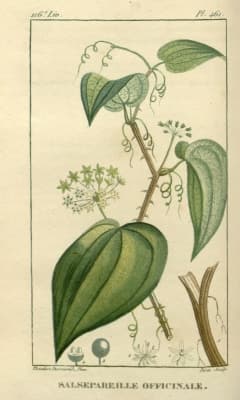
Smilax officinalis
Smilax officinalis
Family: Smilacaceae
Cultivation
The root, when used for medicinal purposes, is long and tuberous-spreading 180 - 250cm long. It is odourless and fairly tasteless.
Full cultivation guide →Smilax pseudochina
Smilax pseudochina
Family: Smilacaceae
Cultivation
Succeeds in most soils in sun or semi-shade. A dioecious species - both male and female forms must be grown if fruit and seed are required.
Full cultivation guide →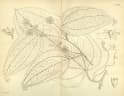
Smilax regelii
Smilax regelii
Family: Smilacaceae
Cultivation
Succeeds in sun or partial shade. Tolerant of a range of soil types.
Full cultivation guide →Smilax riparia
Smilax riparia
Family: Smilacaceae
Cultivation
Smilax riparia can be found from the cold temperate zone in northern China to the subtropics of southern China. Succeeds in most soils in sun or semi-shade. A dioecious species - both male and female forms must be grown if fruit and seed are required.
Full cultivation guide →Smilax rotundifolia
Smilax rotundifolia
Family: Smilacaceae
Cultivation
Smilax rotundifolia is hardy to about -20°c. Succeeds in most soils in sun or semi-shade. A very free growing plant, it can be used to clamber over large trees, shrubs or tree stumps.
Full cultivation guide →Smilax sieboldii
Smilax sieboldii
Family: Smilacaceae
Cultivation
Succeeds in most soils in sun or semi-shade. A dioecious species - both male and female forms must be grown if fruit and seed are required.
Full cultivation guide →Smilax tamnoides
Smilax tamnoides
Family: Smilacaceae
Cultivation
At least in the north of its range, Salix tamnoides is hardy to about -15°c. Succeeds in most soils in sun or semi-shade. A very ornamental plant, it thrives in Britain.
Full cultivation guide →Smilax trinervula
Smilax trinervula
Family: Smilacaceae
Cultivation
Smilax trinervula is native to the warm temperate and subtropical zones of Japan and southern China. Succeeds in most soils in sun or semi-shade. A dioecious species - both male and female forms must be grown if fruit and seed are required.
Full cultivation guide →