Plinia — 9 species
Botanical species in the genus Plinia recorded in the PlantPeers database.

Plinia cauliflora
Plinia cauliflora
Family: Myrtaceae
Cultivation
A plant of the tropics, where it is found at elevations up to 1,700 metres. It grows best in areas where annual daytime temperatures are within the range 22 - 28°c, but can tolerate 10 - 32°c. When dormant, the plant can survive occasional short-lived temperatures down to about -3°c, but young growth can be severely damaged at -1°c.
Full cultivation guide →
Plinia coronata
Plinia coronata
Family: Myrtaceae
Cultivation
Succeeds in the tropics and subtropics. Succeeds in full sun to moderate shade. Prefers a well-drained soil, but plants can tolerate occasional short-lived inundation.
Full cultivation guide →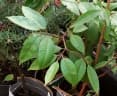
Plinia edulis
Plinia edulis
Family: Myrtaceae
Cultivation
Grows best with some shade. Prefers a deep, fertile, humus-rich soil. Plants have a high requirement for iron.
Full cultivation guide →Plinia grandifolia
Plinia grandifolia
Family: Myrtaceae
Cultivation
Grows best in a shady position. Prefers a well-drained soil. Newly planted young trees grow away quite slowly.
Full cultivation guide →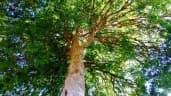
Plinia peruviana
Plinia peruviana
Family: Myrtaceae
Cultivation
Succeeds in full sun to moderate shade. Newly planted young trees grow away moderately well.
Full cultivation guide →Plinia phitrantha
Plinia phitrantha
Family: Myrtaceae
Cultivation
A plant of the moist, tropical lowlands, where it is found at elevations up to 400 metres. Succeeds in full sun to moderate shade. Plants can tolerate occasional inundation.
Full cultivation guide →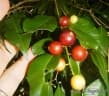
Plinia rivularis
Plinia rivularis
Family: Myrtaceae
Cultivation
Succeeds in full sun to moderate shade. Found in the wild in deep, well-drained soils of moderate fertility. Established plants are drought tolerant.
Full cultivation guide →Plinia spirito-santensis
Plinia spirito-santensis
Family: Myrtaceae
Cultivation
Grows best in partial to fairly deep shade. Plants can tolerate temporary, short-lived inundation. Newly planted young trees grow away quite slowly.
Full cultivation guide →