Machaerium — 22 species
Botanical species in the genus Machaerium recorded in the PlantPeers database.

Machaerium aculeatum
Machaerium aculeatum
Family: Fabaceae
Cultivation
A plant of lowland subtropical to tropical areas being found from around sea level to over 1,000 metres. Prefers a sunny position, succeeding in most kinds of soil. Young plants establish reasonably well, reaching a height of 2.5 metres within 2 years.
Full cultivation guide →
Machaerium acutifolium
Machaerium acutifolium
Family: Fabaceae
Cultivation
Grows best in a sunny position. Requires a well-drained soil. Established plants are drought tolerant.
Full cultivation guide →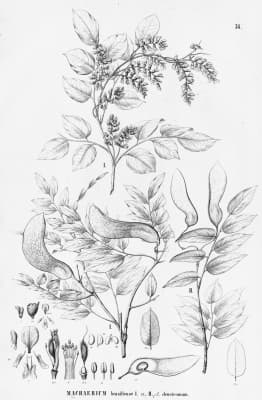
Machaerium brasiliense
Machaerium brasiliense
Family: Fabaceae
Cultivation
Grows best in a sunny position. Prefers a well-drained soil. Established plants are drought tolerant.
Full cultivation guide →
Machaerium caudatum
Machaerium caudatum
Family: Fabaceae
Cultivation
A plant of lowland, humid tropical areas. We have no specific information for this species, but many species in this genus have a symbiotic relationship with certain soil bacteria; these bacteria form nodules on the roots and fix atmospheric nitrogen. Some of this nitrogen is utilized by the growing plant but some can also be used by other plants growing nearby.
Full cultivation guide →Machaerium firmum
Machaerium firmum
Family: Fabaceae
Cultivation
This species is closely related to Machaerium incorruptibile. This species has a symbiotic relationship with certain soil bacteria; these bacteria form nodules on the roots and fix atmospheric nitrogen. Some of this nitrogen is utilized by the growing plant but some can also be used by other plants growing nearby.
Full cultivation guide →
Machaerium floribundum
Machaerium floribundum
Family: Fabaceae
Cultivation
This species has a symbiotic relationship with certain soil bacteria; these bacteria form nodules on the roots and fix atmospheric nitrogen. Some of this nitrogen is utilized by the growing plant but some can also be used by other plants growing nearby.
Full cultivation guide →Machaerium fulvovenosum
Machaerium fulvovenosum
Family: Fabaceae
Cultivation
Succeeds in full sun to moderate shade. Prefers a moist, fertile, humus-rich, clayey soil. Although many species within the family Fabaceae have a symbiotic relationship with soil bacteria, this species is said to be devoid of such a relationship and therefore does not fix atmospheric nitrogen.
Full cultivation guide →
Machaerium hirtum
Machaerium hirtum
Family: Fabaceae
Cultivation
Grows best in a sunny position. Found in the wild in clay soils that can be alkaline or saline. Tolerates dry soils and also seasonal inundation.
Full cultivation guide →Machaerium incorruptibile
Machaerium incorruptibile
Family: Fabaceae
Cultivation
This species is closely related to Machaerium firmum. This species has a symbiotic relationship with certain soil bacteria; these bacteria form nodules on the roots and fix atmospheric nitrogen. Some of this nitrogen is utilized by the growing plant but some can also be used by other plants growing nearby.
Full cultivation guide →
Machaerium isadelphum
Machaerium isadelphum
Family: Fabaceae
Cultivation
This species has a symbiotic relationship with certain soil bacteria, these bacteria form nodules on the roots and fix atmospheric nitrogen. Some of this nitrogen is utilized by the growing plant but some can also be used by other plants growing nearby.
Full cultivation guide →
Machaerium lunatum
Machaerium lunatum
Family: Fabaceae
Cultivation
This species has a symbiotic relationship with certain soil bacteria, these bacteria form nodules on the roots and fix atmospheric nitrogen. Some of this nitrogen is utilized by the growing plant but some can also be used by other plants growing nearby.
Full cultivation guide →
Machaerium macrophyllum
Machaerium macrophyllum
Family: Fabaceae
Cultivation
A plant of lowland, humid tropical areas. This species has a symbiotic relationship with certain soil bacteria; these bacteria form nodules on the roots and fix atmospheric nitrogen. Some of this nitrogen is utilized by the growing plant but some can also be used by other plants growing nearby.
Full cultivation guide →
Machaerium nyctitans
Machaerium nyctitans
Family: Fabaceae
Cultivation
Grows best in a sunny position. Succeeds in a wide range of soils. A fairly fast-growing plant, able to reach a height of around 2.5 metres within 2 years from seed.
Full cultivation guide →
Machaerium opacum
Machaerium opacum
Family: Fabaceae
Cultivation
Requires a sunny position. Prefers a well-drained, clayey soil of moderate fertility. Established plants are drought tolerant.
Full cultivation guide →
Machaerium paraguariense
Machaerium paraguariense
Family: Fabaceae
Cultivation
Requires a sunny position. Requires a well-drained soil, succeeding in poor and dry soils. Established plants are drought tolerant.
Full cultivation guide →Machaerium pedicellatum
Machaerium pedicellatum
Family: Fabaceae
Cultivation
This species has a symbiotic relationship with certain soil bacteria, these bacteria form nodules on the roots and fix atmospheric nitrogen. Some of this nitrogen is utilized by the growing plant but some can also be used by other plants growing nearby.
Full cultivation guide →
Machaerium scleroxylon
Machaerium scleroxylon
Family: Fabaceae
Cultivation
Succeeds in full sun and also in moderate shade. Prefers well-drained, fertile, clayey soils, succeeding in dry, stony conditions. Established plants are drought tolerant.
Full cultivation guide →
Machaerium stipitatum
Machaerium stipitatum
Family: Fabaceae
Cultivation
Grows best in a sunny position. Prefers a moist, fertile soil. Plants have a moderate rate of growth.
Full cultivation guide →Machaerium vestitum
Machaerium vestitum
Family: Fabaceae
Cultivation
Requires a sunny position. Grows best in a fertile, well-drained soil of good quality, Established plants are drought tolerant. Young plants have a moderate rate of growth.
Full cultivation guide →
Machaerium villosum
Machaerium villosum
Family: Fabaceae
Cultivation
Grows best in a sunny position. Found in the wild mainly on well-drained, sandy soils. Plants have a moderate rate of growth.
Full cultivation guide →