Lonicera — 22 species
Botanical species in the genus Lonicera recorded in the PlantPeers database.

Lonicera affinis
Lonicera affinis
Family: Caprifoliaceae
Cultivation
Prefers a good moist soil with its roots in the shade and its top growing into the light. A climbing plant, supporting itself by twining around other plants.
Full cultivation guide →Lonicera angustifolia
Lonicera angustifolia
Family: Caprifoliaceae
Cultivation
An easily grown plant, it grows best in a good moist soil in a sunny position, it does not fruit so well in the shade. Plants are fairly wind tolerant. Plants flower and fruit better in hotter climates than Britain.
Full cultivation guide →Lonicera caerulea
Lonicera caerulea
Family: Caprifoliaceae
Cultivation
Grows best in a good moist soil in a sunny position, it does not fruit so well in the shade. Closely related to L. villosa. Interesting botanically because it appears as though two flowers arise from a single ovary.
Full cultivation guide →Lonicera canadensis
Lonicera canadensis
Family: Caprifoliaceae
Cultivation
Grows best in a good moist soil in a sunny position, it does not fruit so well in the shade.
Full cultivation guide →Lonicera caprifolium
Lonicera caprifolium
Family: Caprifoliaceae
Cultivation
Prefers a good moist soil with its roots in the shade and its top growing into the light. Succeeds even in quite deep shade. Tolerates both acid and alkaline soils, only showing distress on very alkaline soils.
Full cultivation guide →Lonicera chrysantha
Lonicera chrysantha
Family: Caprifoliaceae
Cultivation
An easily grown plant, succeeding in any fertile soil, and preferring a good moist soil in a sunny position. It does not fruit so well when grown in the shade. A very hardy plant, tolerating temperatures down to about -40°c.
Full cultivation guide →Lonicera ciliosa
Lonicera ciliosa
Family: Caprifoliaceae
Cultivation
Prefers a good loamy soil and cool moist conditions at the roots. Succeeds in partial shade. Subject to attacks by aphis, especially in hot dry spells.
Full cultivation guide →Lonicera gracilipes
Lonicera gracilipes
Family: Caprifoliaceae
Cultivation
Grows best in a good moist soil in a sunny position, it does not fruit so well in the shade.
Full cultivation guide →Lonicera gracilipes glabra
Lonicera gracilipes glabra
Family: Caprifoliaceae
Cultivation
Grows best in a good moist soil in a sunny position, it does not fruit so well in the shade.
Full cultivation guide →Lonicera henryi
Lonicera henryi
Family: Caprifoliaceae
Cultivation
Prefers a good moist soil with its roots in the shade and its top growing up into the light. Plants are hardy to about -20°c. A vigorous climber, supporting itself by twining around other plants.
Full cultivation guide →Lonicera involucrata
Lonicera involucrata
Family: Caprifoliaceae
Cultivation
An easily grown and very tolerant plant, succeeding in any fertile soil, and preferring a good moist soil in a sunny position. It produces less fruit when grown in the shade. Plants have proved to be quite wind resistant when growing on an exposed site in Cornwall.
Full cultivation guide →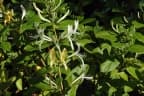
Lonicera japonica
Lonicera japonica
Family: Caprifoliaceae
Cultivation
Lonicera japonica is a plant mainly of the temperate zone, though it has also been cultivated in the tropics. When dormant, plants are hardy to about -20°c. The foliage can be damaged in severe wind-chill conditions but the plant usually recovers in the spring.
Full cultivation guide →Lonicera morrowii
Lonicera morrowii
Family: Caprifoliaceae
Cultivation
An easily grown plant, succeeding in any fertile soil, and preferring a good moist soil in a sunny position. There is at least one named variety, developed for its ornamental value. 'Guldperle' is from Denmark and has yellow berries.
Full cultivation guide →Lonicera nitida
Lonicera nitida
Family: Caprifoliaceae
Cultivation
A very easily grown and tolerant plant, it succeeds in any fertile soil, preferring a good moist soil in a sunny position. Succeeds in deep shade. Established plants are fairly drought tolerant, so long as there is plenty of humus in the soil.
Full cultivation guide →Lonicera periclymenum
Lonicera periclymenum
Family: Caprifoliaceae
Cultivation
Succeeds in most soils from acid to base-rich. Prefers its roots in the shade with its shoots climbing up into the sun. Plants succeed even in quite deep shade.
Full cultivation guide →Lonicera pileata
Lonicera pileata
Family: Caprifoliaceae
Cultivation
Succeeds in almost any soil in sun or shade but prefers a good moist soil in a sunny position. Established plants are drought tolerant, they also succeed in dry shade. Plants do not fruit so well when they are grown in the shade.
Full cultivation guide →Lonicera quinquelocularis
Lonicera quinquelocularis
Family: Caprifoliaceae
Cultivation
Succeeds in most soils but prefers a good moist soil in a sunny position. Does not fruit so well when grown in the shade. Plants are hardy to about -15°c.
Full cultivation guide →Lonicera sempervirens
Lonicera sempervirens
Family: Caprifoliaceae
Cultivation
Succeeds in most soils but prefers a good moist soil in a sunny position. Does not fruit so well when grown in the shade. Plants are very hardy, tolerating temperatures down to -15°c or lower, though they can be deciduous in cold winters.
Full cultivation guide →Lonicera utahensis
Lonicera utahensis
Family: Caprifoliaceae
Cultivation
Grows best in a good moist soil in a sunny position, it does not fruit so well in the shade. Closely related to L. canadensis.
Full cultivation guide →Lonicera venulosa
Lonicera venulosa
Family: Caprifoliaceae
Cultivation
Grows best in a good moist soil in a sunny position, it does not fruit so well in the shade. Closely related to L. caerulea.
Full cultivation guide →Lonicera villosa
Lonicera villosa
Family: Caprifoliaceae
Cultivation
Prefers a good moist soil in a sunny position, fruiting less well when grown in the shade. Closely related to L. caerulea. Polymorphic.
Full cultivation guide →Lonicera villosa solonis
Lonicera villosa solonis
Family: Caprifoliaceae
Cultivation
Prefers a good moist soil in a sunny position, fruiting less well when grown in the shade. Closely related to L. caerulea. Polymorphic.
Full cultivation guide →