Eryngium — 14 species
Botanical species in the genus Eryngium recorded in the PlantPeers database.

Eryngium amorginum
Eryngium amorginum
Family: Apiaceae
Eryngium caeruleum
Eryngium caeruleum
Family: Apiaceae
Cultivation
Requires a well-drained soil and a sunny position. Prefers a light sandy soil but tolerates most soil types including lime and poor gravels. Plants should be put in their final position whilst small since they resent root disturbance.
Full cultivation guide →Eryngium campestre
Eryngium campestre
Family: Apiaceae
Cultivation
Requires a well-drained soil and a sunny position. Prefers a light sandy soil but tolerates most soil types including lime and poor gravels. The plant has deep and wide-ranging roots, it can spread freely in the garden and become difficult to eradicate.
Full cultivation guide →
Eryngium carlinae
Eryngium carlinae
Family: Apiaceae
Cultivation
Grows at mid to higher elevations in tropical and subtropical areas. Prefers a moderately fertile, well-drained soil and a position in full sun. Members of this genus are usually tolerant of a range of soil types, including lime and poor gravelly soils.
Full cultivation guide →Eryngium creticum
Eryngium creticum
Family: Apiaceae
Cultivation
Requires a well-drained soil and a sunny position. Prefers a light sandy soil but tolerates most soil types including lime and poor gravels. Plants should be put in their final position whilst small since they resent root disturbance.
Full cultivation guide →
Eryngium foetidum
Eryngium foetidum
Family: Apiaceae
Cultivation
Prefers a well-drained soil in a very sunny position. Prefers a partly shaded site and a fertile, not too dry soil. Plants do not usually grow close together but appear as individual weeds.
Full cultivation guide →Eryngium graecum
Eryngium graecum
Family: Apiaceae
Cultivation
We have almost no information on this species and do not know if it will be hardy in Britain. It is not in 'Flora Europaea' and so there is a very good chance that it is not a valid name. Judging by the needs of other members of this genus it probably requires a well-drained soil and a sunny position, preferring a light sandy soil but tolerating most soil types including lime and poor gravels.
Full cultivation guide →Eryngium maritimum
Eryngium maritimum
Family: Apiaceae
Cultivation
Requires a deep well-drained soil and a sunny position. Prefers a light sandy saline soil but tolerates most soil types including lime and poor gravels. Plants are best grown in a hot dry position.
Full cultivation guide →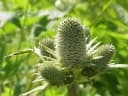
Eryngium pandanifolium
Eryngium pandanifolium
Family: Apiaceae
Cultivation
Eryngium pandanifolium is a plant of mainly subtropical areas, just moving into the tropical zone. It is not very hardy in temperate regions but has survived occasional, short-lived temperatures down to around -10°c when grown in a very well-drained soil and a sheltered position. Requires a well-drained soil and a sunny position.
Full cultivation guide →Eryngium planum
Eryngium planum
Family: Apiaceae
Cultivation
Requires a well-drained soil and a sunny position. Prefers a light sandy soil but tolerates most soil types including lime and poor gravels. When grown in soils that are too rich the stems will need staking before they flop.
Full cultivation guide →Eryngium ternatum
Eryngium ternatum
Family: Apiaceae
Cultivation
We have very little information on this species and do not know if it will be hardy in Britain. The following notes are based on the general needs of the genus. Requires a well-drained soil and a sunny position.
Full cultivation guide →Eryngium viride
Eryngium viride
Family: Apiaceae
Cultivation
We have very little information on this species and do not even know its native range, let alone whether it will be hardy in Britain. The following notes are based on the general needs of the genus. Requires a well-drained soil and a sunny position.
Full cultivation guide →Eryngium yuccifolium
Eryngium yuccifolium
Family: Apiaceae
Cultivation
Requires a well-drained soil and a sunny position. Prefers a light sandy soil but tolerates most soil types including lime and poor gravels. Plants should be put in their final position whilst small since they resent root disturbance.
Full cultivation guide →