Dacrydium — 12 species
Botanical species in the genus Dacrydium recorded in the PlantPeers database.

Dacrydium beccarii
Dacrydium beccarii
Family: Podocarpaceae
Cultivation
Dacrydium beccari is found at elevations from 600 - 2,500 metres. Within its range, the mean annual temperature is 22.5°c, with an average minimum in the coldest month of 18.3°c. It can withstand occasional short-lived temperatures falling as low as between -1°c and +4.4°C).
Full cultivation guide →Dacrydium comosum
Dacrydium comosum
Family: Podocarpaceae
Cultivation
A dioecious species, both male and female forms need to be grown if fruit and seed are required.
Full cultivation guide →Dacrydium cornwallianum
Dacrydium cornwallianum
Family: Podocarpaceae
Cultivation
A dioecious species, both male and female forms need to be grown if fruit and seed are required.
Full cultivation guide →Dacrydium cupressinum
Dacrydium cupressinum
Family: Podocarpaceae
Cultivation
Dacrydium cupressinum Within its range, mean annual temperature is 10.4°C, with an average minimum in the coldest month of 1.2°C, and a mean annual precipitation of 2633 mm. (cold hardiness limit between -6.6°C and -1.1°C. Requires a light, freely draining soil in a sheltered position with protection from cold winds. Requires high rainfall and humidity if it is to succeed.
Full cultivation guide →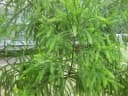
Dacrydium elatum
Dacrydium elatum
Family: Podocarpaceae
Cultivation
Grows at low to medium elevations in the moist tropics. Within its range, the mean annual temperature is 21.2°c, with an average minimum in the coldest month of 12.7c. It can tolerate occasional, short-lived temperatures falling to around -1°c and +4.4°c.
Full cultivation guide →Dacrydium gibbsiae
Dacrydium gibbsiae
Family: Podocarpaceae
Cultivation
Dacrydium gibbsiae is able to withstand occasional, short-lived temperatures falling to around -1°c and +4.4°c. In the wild this tree is mostly restricted to soils derived from serpentine and its ultramafic erosion products where competition from other trees is limited. A dioecious species, both male and female forms need to be grown if fruit and seed are required.
Full cultivation guide →Dacrydium gracile
Dacrydium gracile
Family: Podocarpaceae
Cultivation
The plant is often found in the wild in Kerangas forest - a type of moist, heath forest found on acidic, sandy soils that are low in nutrients, especially nitrogen. A dioecious species, both male and female forms need to be grown if fruit and seed are required.
Full cultivation guide →Dacrydium nausoriense
Dacrydium nausoriense
Family: Podocarpaceae
Cultivation
Dacrydium nausoriense grows wild in areas where the mean annual temperature is 23.0°c, with an average minimum in the coldest month of 18.5°c. The rainfall is less than 2,500mm per year with a distinct dry season of 4 - 5 months according to one report, whilst another says that the mean annual precipitation is 2,624 mm. Reported to be slow growing, especially when young.
Full cultivation guide →Dacrydium nidulum
Dacrydium nidulum
Family: Podocarpaceae
Cultivation
Dacrydium nidulum is found in a region where the mean annual temperature is 21.1°c, with an average minimum in the coldest month of 16.1°c. The mean annual precipitation is 2,803mm. A dioecious species, both male and female forms need to be grown if fruit and seed are required.
Full cultivation guide →Dacrydium novoguineense
Dacrydium novoguineense
Family: Podocarpaceae
Cultivation
Dacrydium novoguineense is able to tolerate occasional, short-lived temperatures falling to around -1°c to +4.4°c This species is indifferent to soil types and occurs on clay, sand, quartzite and other rock debris as well as on peat. The plant often regenerates abundantly from seed after disturbance by fire, when it can become temporarily dominant in an area. Numbers are reduced later by competing trees and shrubs.
Full cultivation guide →Dacrydium pectinatum
Dacrydium pectinatum
Family: Podocarpaceae
Cultivation
The plant can occur in the wild on ultrabasic soils supporting an open, low vegetation of shrubs and ferns, where trees remain small. The forest on nutrient-poor sandy soils are known as kerangas and the poorest sites may only support 'heath forest' dominated by this conifer and Gymnostoma (Casuarinaceae) which looks in habit like a conifer A dioecious species, both male and female forms need to be grown if fruit and seed are required.
Full cultivation guide →Dacrydium xanthandrum
Dacrydium xanthandrum
Family: Podocarpaceae
Cultivation
Found in the wild on soils that vary from clay to peat, but only becoming abundant in peat over acid rocks (dacite, granite, or sandstone) or nutrient-poor sand, where competition is less. A dioecious species, both male and female forms need to be grown if fruit and seed are required.
Full cultivation guide →