Cardamine — 33 species
Botanical species in the genus Cardamine recorded in the PlantPeers database.

Cardamine amara
Cardamine amara
Family: Brassicaceae
Cultivation
Easily grown in most moist soils. Prefers a moist humus rich soil in shade or semi-shade. Plants are hardy to at least -20°c.
Full cultivation guide →Cardamine amaraeformis
Cardamine amaraeformis
Family: Brassicaceae
Cultivation
We have very little information on this species and do not know if it will be hardy in Britain, though judging by its native range it could succeed outdoors in many parts of this country. The following notes are based on the general needs of the genus. Prefers a moist humus rich soil in shade or semi-shade but succeeds in most soils that are not dry.
Full cultivation guide →Cardamine bonariensis
Cardamine bonariensis
Family: Brassicaceae
Cultivation
We have very little information on this species and do not know if it will be hardy in Britain, though judging by its native range it could succeed outdoors in many parts of this country. The following notes are based on the general needs of the genus. Prefers a moist humus rich soil in shade or semi-shade but succeeds in most soils that are not dry.
Full cultivation guide →Cardamine bulbifera
Cardamine bulbifera
Family: Brassicaceae
Cultivation
Prefers a moist humus rich soil in shade or semi-shade. The flowers are rarely visited by pollinating insects and seed is rarely set, propagation is carried out by means of bulbils formed on the axils of the upper leaf stems.
Full cultivation guide →Cardamine bulbosa
Cardamine bulbosa
Family: Brassicaceae
Cultivation
We have very little information on this species and do not know if it will be hardy in Britain, though judging by its native range it should succeed outdoors in many parts of this country. The following notes are based on the general needs of the genus. Prefers a moist humus rich soil in shade or semi-shade but succeeds in most soils that are not dry.
Full cultivation guide →Cardamine debilis
Cardamine debilis
Family: Brassicaceae
Cultivation
We have very little information on this species and do not know if it will be hardy in Britain, though judging by its native range it could succeed outdoors in many parts of this country. A polymorphic species. The following notes are based on the general needs of the genus.
Full cultivation guide →Cardamine fauriei
Cardamine fauriei
Family: Brassicaceae
Cultivation
We have very little information on this species and do not know if it will be hardy in Britain, though judging by its native range it should succeed outdoors in most parts of this country. The following notes are based on the general needs of the genus. Prefers a moist humus rich soil in shade or semi-shade but succeeds in most soils that are not dry.
Full cultivation guide →Cardamine flexuosa
Cardamine flexuosa
Family: Brassicaceae
Cultivation
Prefers a moist humus rich soil in shade or semi-shade but it succeeds in most soils and positions. A common garden weed, it is found especially in pot-grown plants.
Full cultivation guide →Cardamine glacialis
Cardamine glacialis
Family: Brassicaceae
Cultivation
We have very little information on this species and do not know if it will be hardy in Britain, though judging by its native range it should succeed outdoors in most parts of this country. A polymorphic species. The following notes are based on the general needs of the genus.
Full cultivation guide →Cardamine heptaphylla
Cardamine heptaphylla
Family: Brassicaceae
Cultivation
Prefers a moist humus rich soil in shade or semi-shade but succeeds in most soils that are not dry. This species was seen growing and thriving in well-drained soil in fairly heavy dappled shade in a woodland garden at Cambridge Botanical Gardens in 1999.
Full cultivation guide →Cardamine hirsuta
Cardamine hirsuta
Family: Brassicaceae
Cultivation
Prefers a moist humus rich soil in shade or semi-shade but it succeeds in most soils and positions. A common garden weed, it can be in flower all year round if the weather is mild. It will usually self-sow very freely in cultivated soil and is found especially in pot-grown plants.
Full cultivation guide →Cardamine impatiens
Cardamine impatiens
Family: Brassicaceae
Cultivation
Succeeds in most soils. Prefers a moist humus rich soil in shade or semi-shade.
Full cultivation guide →Cardamine kitaibelii
Cardamine kitaibelii
Family: Brassicaceae
Cultivation
Prefers a moist humus rich soil in shade or semi-shade but succeeds in most soils that are not dry. This species was seen growing and thriving in well-drained soil in a lightly shaded position at Kew.
Full cultivation guide →Cardamine komarovii
Cardamine komarovii
Family: Brassicaceae
Cultivation
We have very little information on this species and do not know if it will be hardy in Britain, though judging by its native range it could succeed outdoors in many parts of this country. The following notes are based on the general needs of the genus. Prefers a moist humus rich soil in shade or semi-shade but succeeds in most soils that are not dry.
Full cultivation guide →Cardamine leucantha
Cardamine leucantha
Family: Brassicaceae
Cultivation
We have very little information on this species and do not know if it will be hardy in Britain, though judging by its native range it should succeed outdoors in most parts of this country. The following notes are based on the general needs of the genus. Prefers a moist humus rich soil in shade or semi-shade but succeeds in most soils that are not dry.
Full cultivation guide →Cardamine loxostemonoides
Cardamine loxostemonoides
Family: Brassicaceae
Cultivation
We have very little information on this species and do not know if it will be hardy in Britain, though judging by its native range it should succeed outdoors in most parts of this country. This species is closely related to C. pratensis, differing by its lax, flexuose habit with a creeping rhizome, short aerial shoots with showy pinkish or lilac flowers. However, forms reaching very close to C. pratensis are not lacking.
Full cultivation guide →Cardamine lyrata
Cardamine lyrata
Family: Brassicaceae
Cultivation
Succeeds in most soils. Prefers a moist humus rich soil in shade or semi-shade. A stoloniferous species.
Full cultivation guide →Cardamine macrophylla
Cardamine macrophylla
Family: Brassicaceae
Cultivation
Succeeds in most soils. Prefers a moist humus rich soil in shade or semi-shade. Best grown in cool places by water.
Full cultivation guide →Cardamine nasturtioides
Cardamine nasturtioides
Family: Brassicaceae
Cultivation
We have very little information on this species and do not know if it will be hardy in Britain, though judging by its native range it could succeed outdoors in many parts of this country. The following notes are based on the general needs of the genus. Prefers a moist humus rich soil in shade or semi-shade but succeeds in most soils that are not dry.
Full cultivation guide →Cardamine nipponica
Cardamine nipponica
Family: Brassicaceae
Cultivation
We have very little information on this species and do not know if it will be hardy in Britain, though judging by its native range it should succeed outdoors in most parts of this country. The following notes are based on the general needs of the genus. Prefers a moist humus rich soil in shade or semi-shade but succeeds in most soils that are not dry.
Full cultivation guide →Cardamine oligosperma
Cardamine oligosperma
Family: Brassicaceae
Cultivation
We have very little information on this species and do not know if it will be hardy in Britain, though judging by its native range it should succeed outdoors in most parts of this country. A polymorphic species, it is closely related to C. hirsuta. The following notes are based on the general needs of the genus.
Full cultivation guide →Cardamine pennsylvanica
Cardamine pennsylvanica
Family: Brassicaceae
Cultivation
We have very little information on this species and do not know if it will be hardy in Britain, though judging by its native range it should succeed outdoors in most parts of this country. A polymorphic species, it is closely related to C. parviflora. The following notes are based on the general needs of the genus.
Full cultivation guide →Cardamine pentaphyllos
Cardamine pentaphyllos
Family: Brassicaceae
Cultivation
Prefers a moist humus rich soil in shade or semi-shade but succeeds in most soils that are not dry. This species was seen growing and thriving in well-drained soil in fairly heavy dappled shade in a woodland garden at Cambridge Botanical Gardens in 1999.
Full cultivation guide →Cardamine pratensis
Cardamine pratensis
Family: Brassicaceae
Cultivation
Succeeds in most soils so long as they are moist or wet. Prefers a cool damp soil. Succeeds in full sun or partial shade.
Full cultivation guide →Cardamine prorepens
Cardamine prorepens
Family: Brassicaceae
Cultivation
We have very little information on this species and do not know if it will be hardy in Britain, though judging by its native range it should succeed outdoors in most parts of this country. The following notes are based on the general needs of the genus. Prefers a moist humus rich soil in shade or semi-shade but succeeds in most soils that are not dry.
Full cultivation guide →Cardamine raphanifolia
Cardamine raphanifolia
Family: Brassicaceae
Cultivation
Prefers a moist humus rich soil in shade or semi-shade but succeeds in most soils that are not dry. Plants are closely related to Cardamine pratensis.
Full cultivation guide →Cardamine rotundifolia
Cardamine rotundifolia
Family: Brassicaceae
Cultivation
Succeeds in most soils so long as they are not dry. Grows wild in shallow water. Prefers a moist humus rich soil in shade or semi-shade.
Full cultivation guide →Cardamine schinziana
Cardamine schinziana
Family: Brassicaceae
Cultivation
We have very little information on this species and do not know if it will be hardy in Britain, though judging by its native range it should succeed outdoors in most parts of this country. The following notes are based on the general needs of the genus. Prefers a moist humus rich soil in shade or semi-shade but succeeds in most soils that are not dry.
Full cultivation guide →Cardamine scutata
Cardamine scutata
Family: Brassicaceae
Cultivation
We have very little information on this species and do not know if it will be hardy in Britain, though judging by its native range it should succeed outdoors in most parts of this country. The following notes are based on the general needs of the genus. Prefers a moist humus rich soil in shade or semi-shade but succeeds in most soils that are not dry.
Full cultivation guide →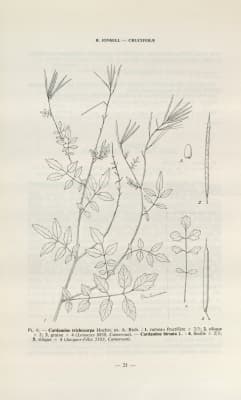
Cardamine trichocarpa
Cardamine trichocarpa
Family: Brassicaceae
Cultivation
In Tanzania it grows in areas where the mean annual rainfall is in the range 1,200 - 1,800mm. Tolerates a wide range of soil types.
Full cultivation guide →Cardamine trifolia
Cardamine trifolia
Family: Brassicaceae
Cultivation
Succeeds in most soils so long as they are not dry. Prefers a moist humus rich soil in shade or semi-shade. A mat-forming stoloniferous species.
Full cultivation guide →Cardamine violacea
Cardamine violacea
Family: Brassicaceae
Cultivation
We have very little information on this species and do not know if it will be hardy in Britain. However, judging by its native range, it is likely to succeed outdoors at least in the milder areas of the country. The following notes are based on the general needs of the genus.
Full cultivation guide →Cardamine yezoensis
Cardamine yezoensis
Family: Brassicaceae
Cultivation
We have very little information on this species and do not know if it will be hardy in Britain, though judging by its native range it should succeed outdoors in most parts of this country. The following notes are based on the general needs of the genus. Prefers a moist humus rich soil in shade or semi-shade but succeeds in most soils that are not dry.
Full cultivation guide →