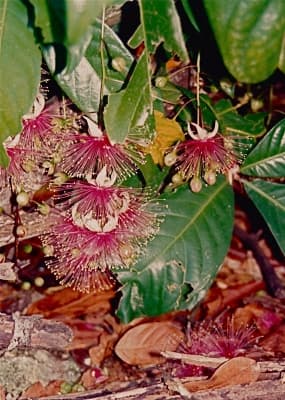
Barringtonia — 13 species
Botanical species in the genus Barringtonia recorded in the PlantPeers database.

Barringtonia acutangula
Barringtonia acutangula
Family: Lecythidaceae
Cultivation
Prefers a permanently moist but well-drained soil and a position in full sun. Particularly suited to humid, shady situations.
Full cultivation guide →
Barringtonia asiatica
Barringtonia asiatica
Family: Lecythidaceae
Cultivation
Barringtonia asiatica is native to the wet tropical, moist topical and wet subtropical climatic zones, in areas with a uniform rainfall pattern and a precipitation of around 1,150 - 4,300mm. This species does not tolerate frost and prefer areas with warm temperatures within the range 20 - 35°c. Prefers a position in full sun or light shade.
Full cultivation guide →
Barringtonia calyptrata
Barringtonia calyptrata
Family: Lecythidaceae
Cultivation
A plant of lowland areas in the tropics, succeeding in both seasonally dry and all year rainfall areas. Prefers a moist soil, but can succeed in drier conditions.
Full cultivation guide →



Barringtonia novae-hiberniae
Barringtonia novae-hiberniae
Family: Lecythidaceae
Cultivation
As pao nuts often do well and are most common on low off shore islands and coral waterfront villages, they may be particularly suited to coral and alkaline soils. If trees are planted in suitable sites and well looked after, they can produce fruit in a year or two from seed. The tree can flower and produce seeds all year round.
Full cultivation guide →Barringtonia procera
Barringtonia procera
Family: Lecythidaceae
Cultivation
A plant of lowland wet tropical, moist topical and wet subtropical climatic zones, it can be found at elevations up to 600 metres. The plant grows in areas where the mean annual temperature is around 27°c, with the hottest moth around 29 - 34°c and the coolest 20 - 23°c. It cannot tolerate even light frosts.
Full cultivation guide →
Barringtonia racemosa
Barringtonia racemosa
Family: Lecythidaceae
Cultivation
A plant of lowland wet tropical, moist topical and wet subtropical climatic zones, it can be found at elevations up to 600 metres. The plant grows in areas where the mean annual temperature is around 27°c, with the hottest moth around 29 - 34°c and the coolest 20 - 23°c. It cannot tolerate even light frosts.
Full cultivation guide →